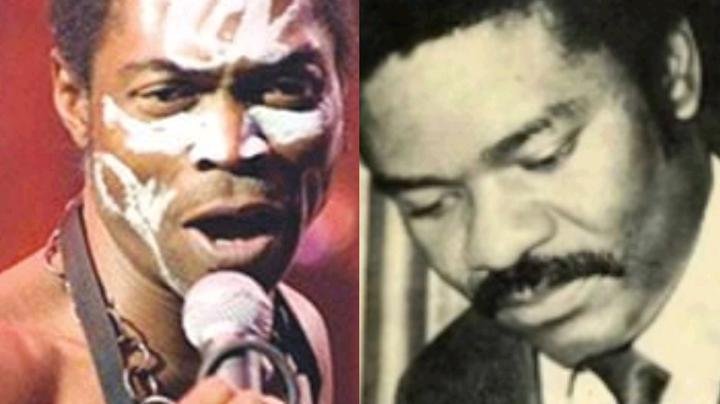
When journalist Dele Giwa was killed in 1986 Fela Kuti was asked who was responsible His response I know say na Baba remains one of the boldest public statements about the case This article revisits the incident Akinnolas recount and its lasting impact on Nigerias history .
The death of Dele Giwa in 1986 remains one of Nigerias most controversial and tragic stories Giwa cofounder of Newswatch magazine was assassinated by a parcel bomb on October 19 1986 in Lagos His death shook the nation and sparked debates about press freedom government accountability and the harsh realities of military rule .
In the aftermath of the killing many Nigerians speculated about who was behind the act Among the boldest voices was that of Afrobeat legend Fela Anikulapo Kuti When asked by a reporter about the tragedy Fela responded in his characteristic fearless style Lawyer and journalist Richard Akinnola later recounted this interaction offering an insight into how Fela publicly pointed fingers in a case that still remains unresolved decades later .
Also Read : Olubadan Coronation Controversy Nigerians Slam Taye Currencys Lyrics
Dele Giwa A Brief Biography
Dele Giwa was born on March 16 1947 in Ife Osun State He began his career in journalism in the United States before returning to Nigeria where he rose through the ranks of Daily Times He later cofounded Newswatch magazine in 1984 with Ray Ekpu Dan Agbese and Yakubu Mohammed .
Newswatch quickly grew into Nigerias most influential magazine known for its bold investigative stories and fearless criticism of government policies Giwa earned a reputation as a truth teller respected by many but feared by those in power Sadly that same courage made him a target .
The Assassination of Dele Giwa
On the morning of October 19 1986 Dele Giwa received a parcel at his home in Ikeja Lagos Believing it was official correspondence he opened it only for it to explode The blast killed him instantly and shocked the nation .
It was the first time a parcel bomb was used in Nigeria and its use against a journalist drew widespread condemnation locally and abroad Yet the perpetrators were never officially identified Suspicion immediately fell on the military government led by General Ibrahim Babangida Just days before his death Giwa had been interrogated by the State Security Service and had voiced concerns about threats to his life .
The Reporters Question and Fela’s Answer
According to Richard Akinnola a Nigerian lawyer author and rights activist a journalist once asked Fela Anikulapo Kuti about who he thought killed Dele Giwa .
Fela replied without hesitation I know say na Baba .
In Nigerian slang Baba often referred to a powerful elder or leader Many interpreted Fela’s answer as a direct accusation toward then Head of State General Ibrahim Babangida .
Fela had never been one to shy away from confrontation He used his music such as Coffin for Head of State and Zombie to criticize corruption brutality and excesses of the military His blunt response about Dele Giwa was consistent with his lifelong role as an uncompromising truth teller .
Why Fela’s Statement Still Matters
Fela’s words carried deep meaning for several reasons .
First it represented fearless defiance At a time when most Nigerians were too afraid to question the regime Fela spoke openly .
Second it amplified public suspicion Many already believed that the government was involved in the killing and Fela gave voice to that suspicion .
Third it served as historical documentation Since official investigations never delivered justice recollections like Akinnola’s and statements like Fela’s remain critical in keeping the memory of the case alive .
Akinnola’s Role in Preserving the Memory
Richard Akinnola who shared this account of Fela’s reaction has devoted his work to documenting key events in Nigeria’s history He has focused especially on human rights and press freedom By retelling Fela’s words he ensures that younger generations understand both the tragedy of Giwa’s assassination and the cultural resistance figures like Fela embodied .
Akinnola often reminds the public that the Nigerian press paid a heavy price for daring to challenge authority and that the sacrifices of people like Giwa must never be forgotten .
Legacy of Dele Giwa’s Death
Nearly four decades after the incident the question Who killed Dele Giwa still hangs in the air No one has ever been tried or convicted in connection with the murder The lack of justice has left a deep scar in Nigerias democratic journey .
Yet Giwa’s death became a rallying point It symbolized the price of truth telling in a nation under authoritarian rule and it inspired generations of journalists to carry on the struggle for press freedom despite intimidation .
For Fela his unflinching statement about the killing reinforced his image not only as a musician but as a conscience of the nation His music and public declarations continue to inspire activists and truth seekers in Nigeria and around the world .
Conclusion
The killing of Dele Giwa was more than the death of a journalist It was an attack on free speech and democracy in Nigeria Fela’s bold answer to the question of who was responsible I know say na Baba has remained etched in history as a daring public challenge to state power .
Although justice is yet to be done voices like Fela’s and Akinnola’s ensure that Giwa’s memory endures His story continues to ignite conversations about justice accountability and freedom of expression values that are still as urgent and necessary today as they were in 1986 .