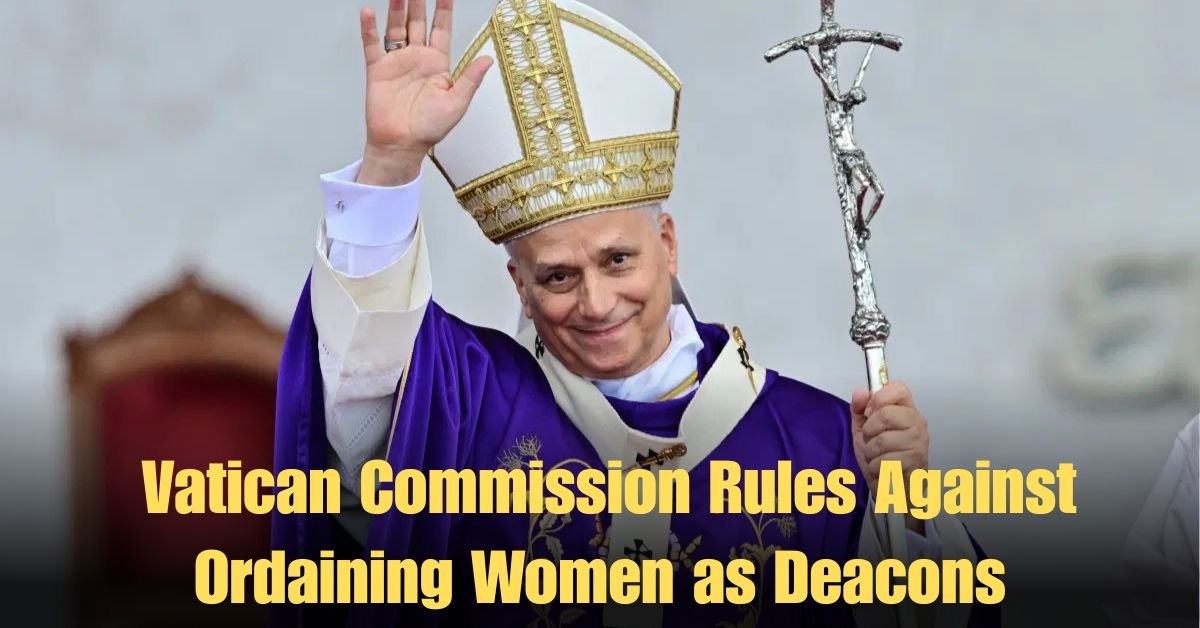
The hopes of countless Catholic women seeking a formal and ordained role in the Catholic Church have been put on hold. A Vatican commission is established by Pope Francis in 2020 study the possibility of female deacons has released its findings and concluding that the current state of historical and theological research “excludes the possibility” of moving forward with the ordination of women as deacons.
This decision is contained in a letter submitted to Pope Leo XIV comes despite the issue gaining significant buzz during the Church’s recent Synod on Synodality (2023 and 2024) and has been met with disappointment and fierce criticism from advocacy groups.
The Commission’s Rationale. Scripture, Tradition and History
The seven page report synthesized by the commission and released by the Vatican emphasizes a cautious and conservative reading of Church doctrine.
The key points influencing the commission’s 7-1 vote against the move are rooted in tradition:
- Sacred Scripture and Tradition. The commission found that in light of Sacred Scripture and Ecclesiastical teaching the current research does not support the admission of women to the diaconate which is the third degree of Holy Orders (below the Presbyterate or priests and Episcopate or bishops).
- Masculinity and Sacramental Identity. The report revealed an internal 5-5 split on a statement asserting that the “masculinity of Christ” and by extension the masculinity of those who receive Holy Orders is an “integral part of the sacramental identity.” This theological principle suggests that ordained ministry must reflect Christ the Bridegroom.
- Historical Ambiguity. While historians note that women served as deacons (often called deaconesses) in the early Church, particularly in the East the commission concluded that the historical and theological research surrounding their function whether they received the same sacramental ordination as men does not allow for a definitive judgment at this time.
Cardinal Giuseppe Petrocchi the president of the commission, acknowledged the complexity of the matter and left the door open to “further theological and pastoral study,” noting the need for “increasingly well-equipped global investigations.”
What Does a Deacon Do? Understanding the Role
The diaconate is an essential albeit often misunderstood, role in the Catholic Church. Deacons are ordained ministers whose primary focus is service (diakonia). The role is currently open to married men as well as unmarried men preparing for the priesthood (transitional deacons).
Advocates’ Response .A Decision That Will Harm the Global Church”
The decision was instantly met with outrage from groups championing greater female involvement in the Church.
Also Read: Donald Trump’s Two-Minute Moment at the FIFA World Cup Draw
Kate McElwee, Executive Director of the Women’s Ordination Conference excoriated the Vatican’s stance stating the refusal to even open the door “will harm the global church.” She criticized the commission’s integrity questioning the seriousness of their consideration given the lack of robust female input and the close internal division on core theological points.
Advocates point out that the question of Ordination of women as deacons is not simply a matter of historical precedent but a vital issue of equality and co responsibility in the modern Church. The focus on the “Masculinity of Christ” as a barrier to ministry was called a “theologically unsound insult” by McElwee.
Disclaimer:
This article summarizes the findings of a Vatican commission regarding the possibility of women serving as deacons in the Catholic Church. The views and conclusions presented including those citing Sacred Scripture, Tradition and the role of the Masculinity of Christ reflect the official assessment released in the commission’s letter to Pope Leo XIV.