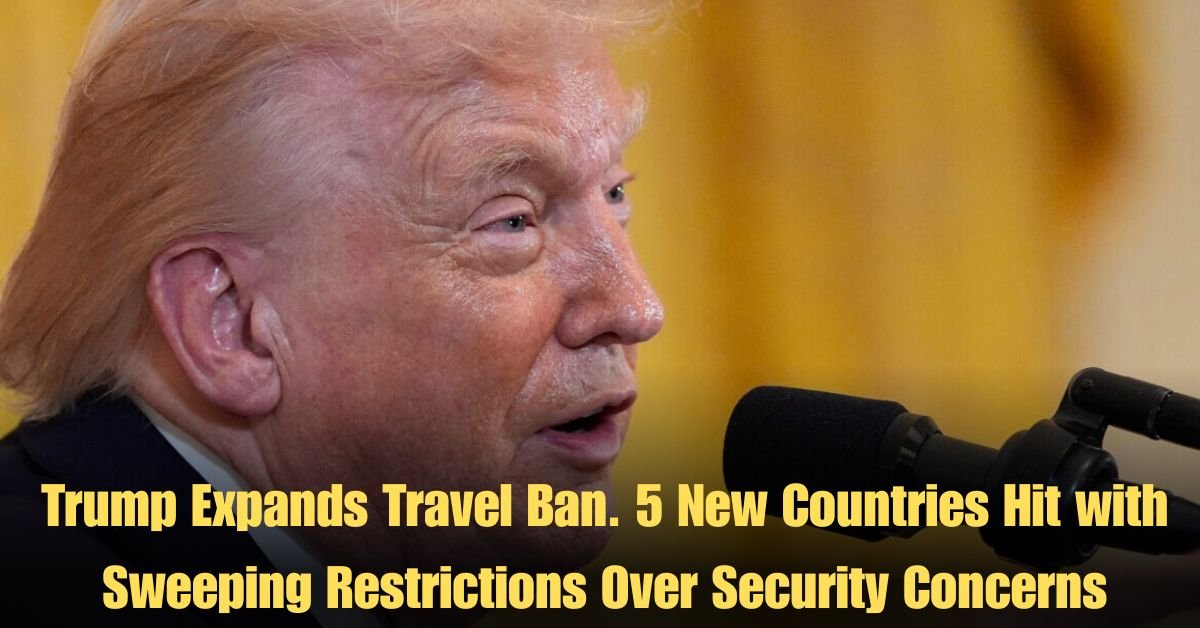
The landscape of American immigration underwent seismic shift this week. On Tuesday December 16, 2025 President Donald Trump officially expanded the U.S travel ban to adding five new countries to the “full suspension” list and imposing partial restrictions on 15 others.
Citing deep seated national security concerns and “chronic vetting deficiencies,” the administration is tightening the borders in a move that echoes the “extreme vigilance” promised during his return to office.
The New “Full Ban” List: Who is Affected?
The current proclamation significantly broadens the scope of the original travel restrictions issued in June 2025. Citizens from the following five nations face a total pause of entry into the United States.
- Burkina Faso
- Mali
- Niger
- South Sudan
- Syria
Additionally the White House confirmed that individuals holding Palestinian Authority issued travel documents are now fully barred from entry. In a further escalation two countries previously under “partial” restrictions Laos and Sierra Leone have been moved to the full suspension category.
Why These Countries? The Administration’s Justification
According to the official proclamation these nations suffer from “widespread corruption” and “unreliable civil documents.” The Department of Homeland Security (DHS) specifically highlighted.
- Vetting Obstacles. Nonexistent birth registration systems and a lack of criminal record sharing.
- Terrorism Risks. Active radical groups in the Sahel region (Mali, Niger and Burkina Faso).
- Lack of Co operation. Governments refusing to accept back their own nationals after deportation.
15 Countries Facing Partial Restrictions
Beyond the full bans, the Trump administration identified 15 additional nations that will face “partial restrictions,” primarily targeting specific visa classes like B1/B2 (tourism/business) and F, M and J (student/exchange) visas.
The White House noted that these countries often permit “Citizenship by Investment” schemes which the administration claims allow individuals to bypass standard U.S vetting by concealing their true identities.
National Security or Policy Shift? The Afghan Connection
The timing of this expansion is not coincidental. It follows the tragic shooting of two National Guard soldiers in Washington, D.C over the Thanksgiving holiday. The suspect Rahmanullah Lakanwal, is an Afghan national who entered the U.S under the Biden-era “Operation Allies Welcome.”
Secretary of Homeland Security Kristi Noem has been vocal in labeling the incident a failure of the previous administration’s “mass parole” system. “The United States must exercise extreme vigilance to identify foreign nationals who intend to harm Americans before they set foot on our soil,” the White House stated.
Impact on Families and Legal Immigration
A key pillar of the new proclamation is the narrowing of family based immigrant visa carve-outs. Previously many family members were exempt from certain restrictions however the new rules aim to close what the administration calls “demonstrated fraud risks.” While case by case waivers remain a possibility the bar for entry has been raised significantly.
FAQs
When does the ban take change?
Highest provisions are set to be implemented by 1 January 2026.
Are current visa holders changed?
Generally the proclamation does not revoke valid visas already issued but it may affect renewals and new applications.
Who is exempt?
Lawful permanent residents (Green Card holders) diplomats and certain players typically remain exempt.
Disclaimer:
The news information presented is based on available reports and reliable sources. Readers should cross check updates from official news outlets and the official White House website for the most current legal guidance.