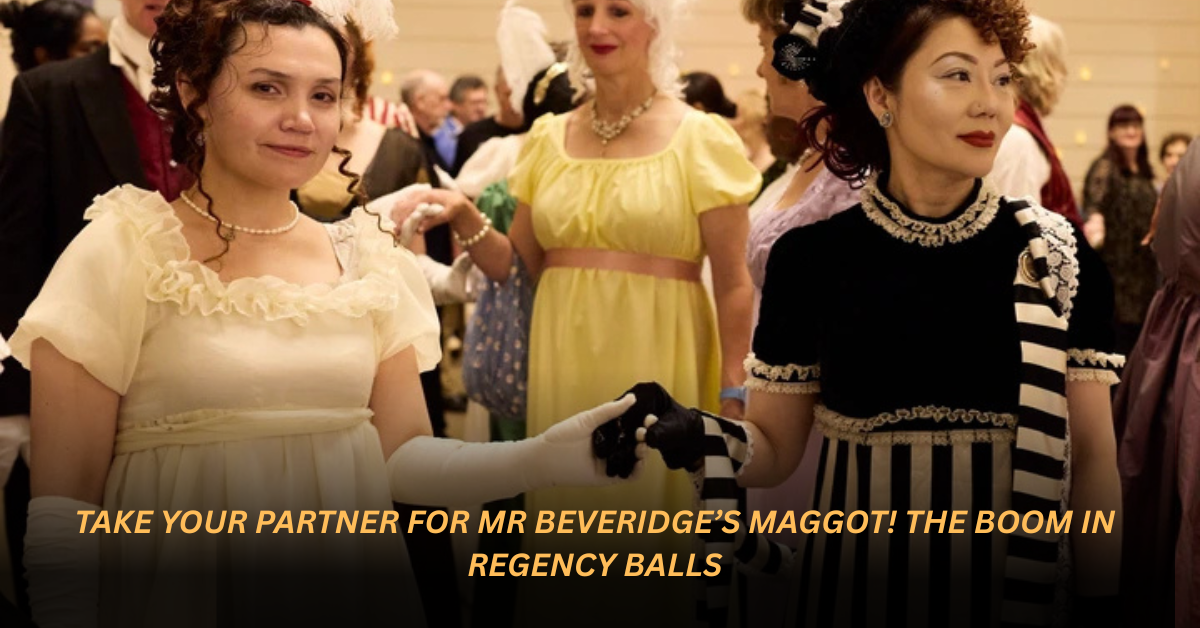
Fans of Jane Austen and Bridgerton delight in recreating historical dances – but how do they learn the right moves?
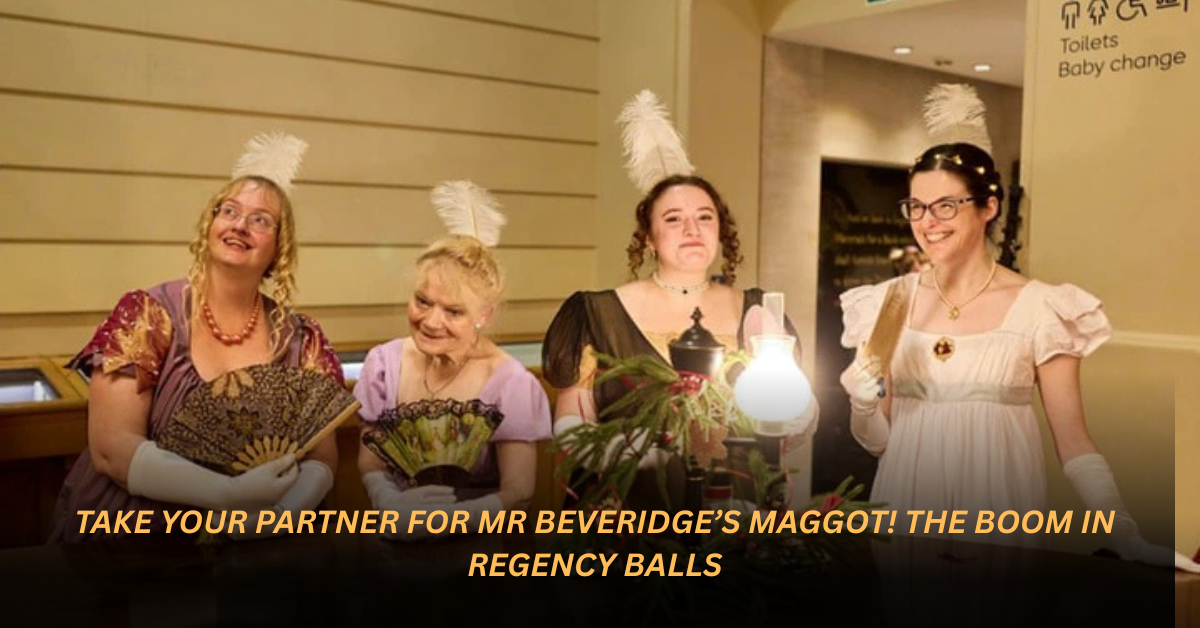
Inside the high-arched lobby of the Bank of England Museum, lines of women in flowing satin dresses twirl around men wearing stiff collars and black tailcoats. The room is filled with the sound of violins and conversation. The feathers and flowers on dancers’ heads sway as they laugh and chatter.
Regency Period
This Jane Austen-themed ball, in celebration of the author’s 250th anniversary, is one of many held by historical dance societies across the country. Enthusiasts of the Regency period, including fans of Netflix’s Bridgerton, come together to learn and perform the dances enjoyed by Austen and her contemporaries.
Gradually Losing
David Symington, 73, and Irina Porter (above left) became friends through such gatherings. “People who take part in these events get a lot of personal interaction – and that’s something we are gradually losing,” says Porter. “We often change partners, and introduce ourselves to other people. This lovely sense of community and personal interaction is very special.”
“It’s a really effective socialising space,” says Gemima Lodge, 40. “You see the same faces and start making connections.”
Historical Dance
Costumes are an important element, with attenders commissioning specialist tailors, hand making their own dresses or sourcing Bridgerton-inspired outfits online. Mary Davidson, 26, and Lian Cooper, 37, sew together Regency-era dresses using old bedsheets, curtains and secondhand sarees. They became friends through their mutual love of historical dance and costume-making. “Everyone is so disconnected, stuck behind their phones now,” says Davidson. “We’re harking back to the old times. People have done this for hundreds of years and it’s really fun and social.”
Dance Notations
Putting on these events takes careful interpretation of 18th-century manuals, which instructed how to perform various social dances (or contredanses, due to partners standing opposite one another). Some, such as John Playford’s 1651 The Dancing Master, contain written instructions for the dances beneath sheet music. Others, such as Thomas Wilson’s, are filled with swirling diagrams known as dance notations, that represent a dancer’s movements across the floor.
ALSO READ: ‘Significant work’ needed to help at-risk children
Simplified Feuillet
The Beauchamp-Feuillet system, first published by Raoul-Auger Feuillet in his 1700 book Chorégraphie, recorded the steps of courtly dances in spiralling and geometric patterns. In his 1706 manual for contredanses, Feuillet omitted individual steps and laid out the patterns of how dancers will move across the floor – a system known as Simplified Feuillet. The book was translated into English by John Essex in 1710.
New College Oxford
“It’s the first visual guide we get,” explains Jennifer Thorp, a dance historian and emeritus archivist for New College, Oxford. “You get the tune at the top of the page and then these floor plans telling people where to go. There were occasionally special symbols, because in some contredanses you might clap your hands or wag a finger at your partner. And people actually had the choice of what steps they were going to use.”
Dance notation is still used today, particularly in ballet. The Benesh Movement Notation uses five lines, like the stave on a sheet of music, to record the movements of the dancer’s head, shoulders, waist, knees and feet.
Paul Cooper
Paul Cooper, a member of the Hampshire Regency Dancers, transforms written instructions and diagrams into animations of Regency dances, making it easier for others to learn. “The instructions, as written, are close to being a computer programme,” says Cooper. “There’s iterative activity and a sort of algorithm to it. There are these little conditional statements: if one dancer does this, the other one does that. It’s all very mathematical in the way it’s expressed. Some of these dancing masters would probably do quite well in the modern world as computer programmers.”
Part of his work involves interpreting some of the ambiguities left behind by written instructions. “It’s often quite terse, and invariably leaves you with as many questions as answers. What does this mean? Is there something implied here that isn’t said? How do I go about interpreting that?”
young men
Some dances also need to be adapted for modern tastes. The Triple Minor, a popular country dance in Austen’s time, involves three couples in a line that slowly alternate positions. The first couple performs most of the steps, while the third couple does little to nothing – a rare chance for young men and women to share a few words, out of earshot from their chaperones.