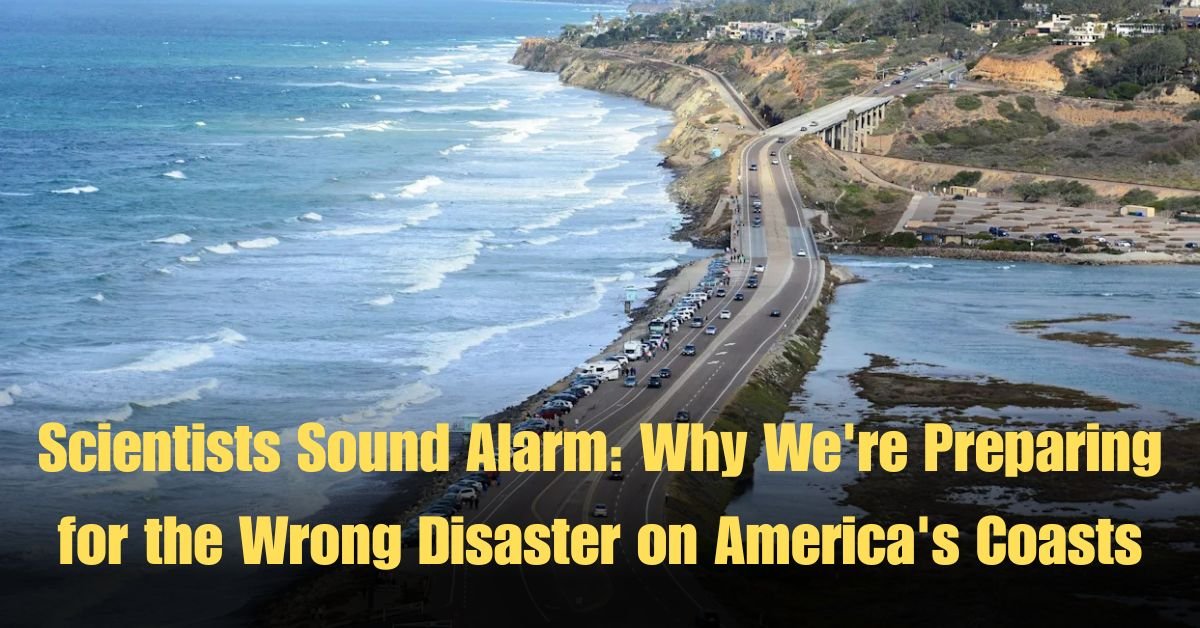
In coastal cities from Texas to North Carolina the scientists are issuing a stern warning the threat of rising sea levels isn’t just a distant problem it’s a rapid, accelerating crisis we are critically underestimating.
A detailed report, citing data from The Washington Post highlights that the U.S. coastlines are experiencing one of the most rapid sea level surges on Earth. Experts contend that our current preparation is severely mismatched to the looming threat, as Rob Young, director of the Program for the Study of Developed Shorelines, put it, “We are preparing for the wrong disaster almost everywhere.”
This engaging, data backed article dives into the unprecedented rate of water level increase the true mechanisms behind it, and the devastating irreversible impacts already being felt across the American South.
The Unprecedented Surge.The Doubling Global Rate
For decades many have linked coastal dangers primarily with catastrophic storms like the hurricanes. While these remain a major risk experts now point to a newer, more insidious challenge: the persistent rapid accumulation of water caused by smaller scale weather events and underlying ocean dynamics.
Since 2010 satellite data and tide gauges confirm an alarming trend.
- The Gulf of Mexico region has seen twice the global average rate of rising the sea levels.
- In just 14 years, sea levels from Texas to North Carolina have registered at least six inches higher.
- Specific cities are seeing dramatic increases:
- Galveston, Texas: A full eight inch increase since 2010.
- Charleston, South Carolina: A seven inch rise hitting the fourth highest water level since records began in 1899.
- Jacksonville, Florida: A six inch increase.
This rapid the unprecedented change is why scientists are sounding the alarm. According to University of Arizona climate scientist Jianjun Yin this recent surge “is very abnormal and irreversible.”
Why is the Water Level Rising So Quickly?
The primary driver is, unequivocally human induced climate change. Warmer the global temperatures lead to be warmer ocean currents causing water to expand (thermal expansion). However the sheer speed of this surge since 2010 indicates complex regional dynamics at play all ultimately fueled by greenhouse gases and a lack of environmental care.
Preparing for ‘Wrong Disaster’
The core issue as highlighted by Rob Young is a failure to shift focus from low frequency, high impact events (hurricanes) to high frequency chronic events (rising sea levels).
“These smaller changes will be a greater threat over time than the next hurricane no question about it.” Rob Young
This looming threat of persistent gradual flooding is more damaging over time because it impacts daily life and critical infrastructure long before a major storm hits.
The Immediate and Insidious Consequences
The chronic increase in water level leads to devastating the long-term impacts on coastal communities:
- Infrastructure Failure: In the American South the increasing frequency of inundation is causing widespread issues particularly with failing septic systems. This leads directly to contaminated water sources for posing serious public health risks.
- Medical Access Cutoff: Routine road flooding during minor storms can completely cut off residents from essential services, including access to medical care and emergency routes.
- Wetlands Drowning: The crucial wetlands in states like Louisiana natural barriers against catastrophic storms are in what scientists call a state of “drowning.” This loss of natural protection makes the state exponentially more vulnerable to future major weather events.
The Economic Fallout: Insurance and Vulnerability
The threat isn’t just physical; it’s economic. These coastal states have already been labeled vulnerable by the finance sector. The reality of accelerating sea level surges only intensifies this instability.
Home Insurance companies have responded by:
- Drastically raising rates.
- Canceling plans outright.
- Leaving entire states, forcing residents onto increasingly expensive and strained state-backed insurance programs.
As the Irreversible nature of the rise sets in, the vulnerability of these housing markets will only increase, turning an environmental crisis into a severe economic and housing crisis.
Also Read:Married Woman Quits Feminism I Forgot My Husband Is a Benin Man
What’s the Next Step for Coastal Resilience?
Overcoming mindset of “preparing for the wrong disaster” requires shifting policy and investment toward the mitigating chronic sea level accumulation.
- Prioritize the Chronic Flooding Solutions: Focus on adaptive infrastructure, elevating critical roadways to handle routine inundation not just storm surges.
- Invest in Natural Barriers: Aggressively the fund wetlands restoration and coastal nourishment projects to restore the natural protections that buffer inland areas.
- Modernize Water Systems: Mandate and subsidize the modernization of waste water management to prevent contaminated water sources ,protect public health.
FAQ
Q: Is the sea level rise due to hurricanes?
A: No While hurricanes cause storm surge the rapid sea level surges since 2010 are primarily due to the accumulation of water caused by long term human induced climate change and warmer currents to making it a chronic and greater threat.
Q: Can this be stopped?
A: Climate scientist Jianjun Yin called the recent surge “irreversible.”
While the rate of the rise can be slowed by drastically cutting emissions the water levels gained since 2010 are likely permanent requiring immediate adaptation measures from coastal communities.
Disclaimer:
This article is based on reported data and scientific findings primarily citing a report from The Washington Post and input from the climate scientists and specialists.The content is for informational and educational purposes and is planned to raise awareness regarding the risks related with accelerating sea level rise and climate change.