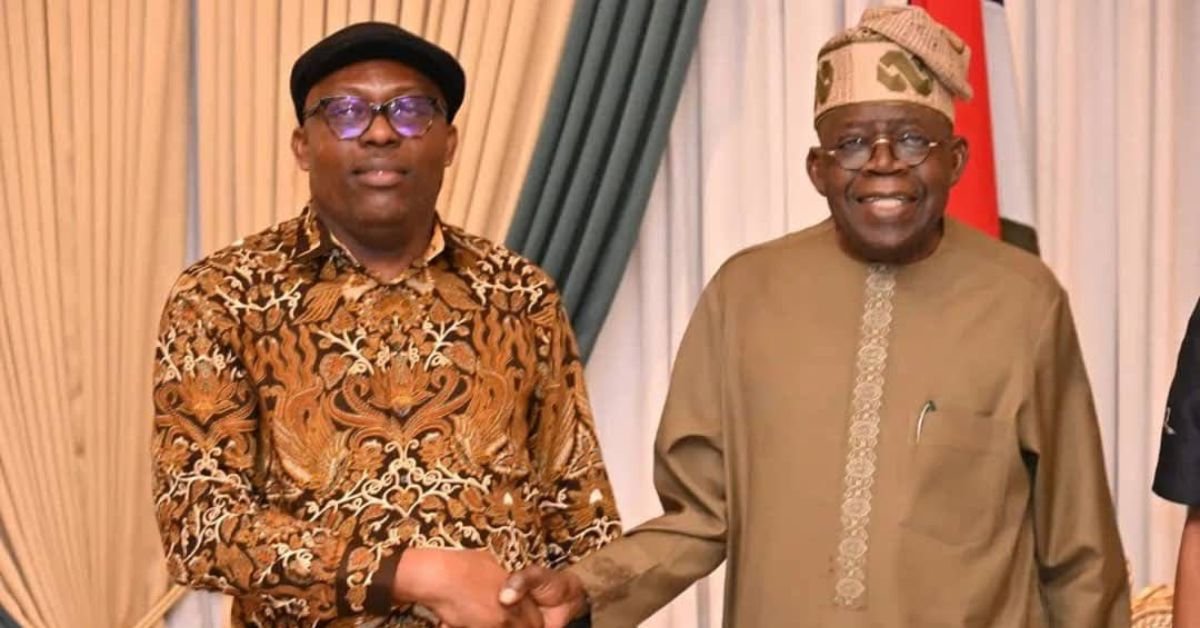
After six months under emergency rule President Bola Tinubu on 18 September 2025 lifted the suspension on Rivers State governor deputy governor the assembly speaker and other legislators Political leaders and groups have shared their views as democratic governance returns to the state .
President Restores Democratic Rule in Rivers State
On 18 September 2025 President Bola Tinubu officially ended the state of emergency in Rivers State Nigeria This decision reinstated Governor Siminalayi Fubara Deputy Governor Ngozi Odu Speaker Martins Amaewhule and all the members of the Rivers State House of Assembly The move restored democratic governance after a period of six months when Rivers State was run by a Sole Administrator The emergency rule had been declared on 18 March 2025 following a total breakdown of governance and escalating political conflict .
Also Read : It Was Fun While It Lasted – Uche Ogbodo Announces Exit from Instagram
Causes of the Emergency
The roots of the emergency lay in the deep political crisis that paralysed the state The governor and the state assembly were sharply divided and unable to present or pass an appropriation bill This governance paralysis crippled the functions of the state legislature and executive In addition the legislature itself was split Four lawmakers stood with Governor Fubara while twenty seven opposed him The growing division threatened peace and stability across the state .
Security concerns made matters worse as key infrastructure including vital oil pipelines was vandalised amid the political unrest Courts also ruled at different stages that Rivers State lacked a functioning government because the executive and legislative arms could not work together Faced with this constitutional breakdown President Tinubu invoked his powers under Section 305 of the 1999 Constitution to suspend the elected officials and appoint Vice Admiral Ibok Etteh Ibas retired as Sole Administrator for six months .
What Happened During the Emergency Period
During the six months of emergency rule the Sole Administrator managed all affairs of the state while the governor deputy governor and lawmakers remained suspended Legislative functions were in dispute with parallel factions attempting to operate while controversial local government elections were nullified The declaration itself faced significant resistance as more than forty court cases were filed challenging its legality This period was marked by uncertainty legal battles and accusations that democratic principles had been undermined .
Restoration Reactions and Implications
Restoration
From midnight of 18 September 2025 the suspended officials returned to their offices Governor Fubara his deputy Speaker Amaewhule and all other lawmakers resumed their constitutional roles President Tinubu explained that his decision was based on the return of relative peace and a new sense of understanding among the political actors in the state .
Reactions
The restoration drew mixed reactions across the political spectrum The Peoples Democratic Party PDP under which Governor Fubara was elected warned him against defecting to another party even as reports suggested that the All Progressives Congress APC was making efforts to woo him with offers of leadership roles The PDP youth wing described the suspension as unconstitutional and demanded an apology from the Federal Government .
The Pan Niger Delta Elders Forum PANDEF reflected on the past six months as one of the darkest chapters in Rivers political history urging leaders and citizens to learn lessons and avoid a repeat of such crises The Ijaw National Congress on the other hand welcomed the end of the emergency rule and encouraged Rivers people to celebrate the return of their elected leaders .
Implications and Challenges Ahead
The reinstatement of democratic institutions is expected to allow the state government to resume stalled projects and restart the budgetary process However questions remain about whether the fragile reconciliation between rival political groups will last in the long term Legal disputes are still ongoing over the validity of the emergency declaration and there are concerns about whether suspended officials will be compensated for the period they were kept out of office .
Conclusion
The end of the six month state of emergency in Rivers State marks a significant turning point for democracy in Nigeria Governor Fubara Deputy Governor Odu Speaker Amaewhule and other lawmakers are now back in office and citizens are hopeful for stability progress and effective governance While optimism surrounds the return of democratic order challenges remain From rebuilding public trust to completing abandoned projects and resolving ongoing legal disputes the path forward will test the resilience of Rivers political leaders and their commitment to serving the people .