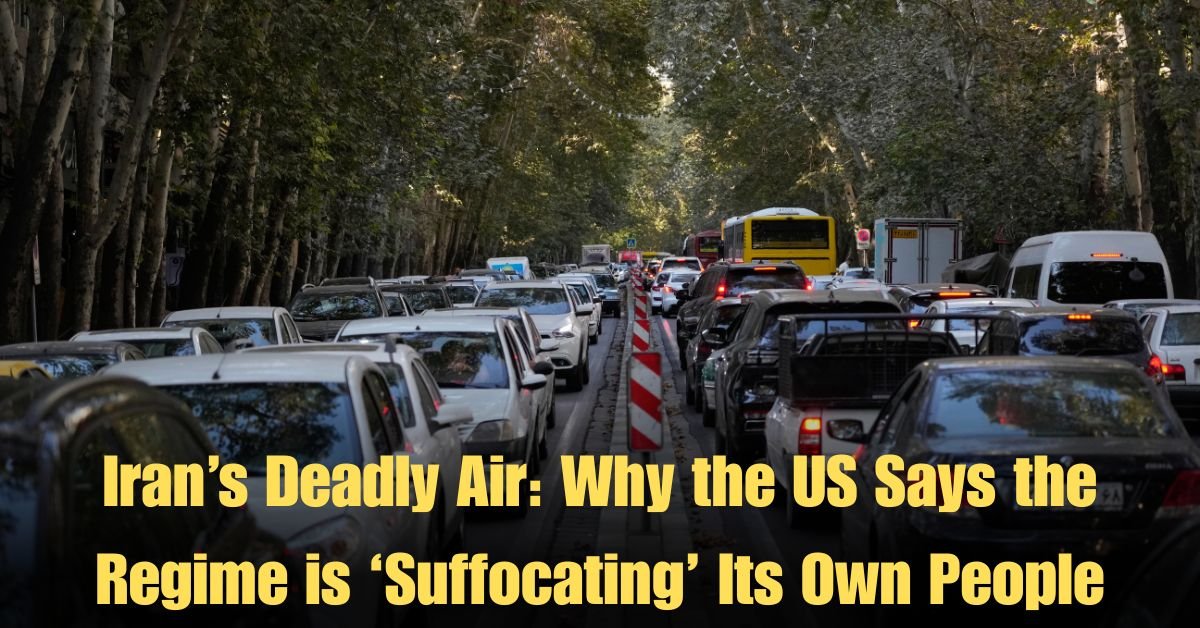
An orange air pollution alert has been issued across several of Iran’s major cities including Tehran and Isfahan as pollutant levels/concentrations surge past hazardous thresholds. This latest environmental catastrophe is not just a weather phenomenon; it is a profound public health crisis that has drawn sharp international condemnation.
The U.S. State Department publicly accused the Iranian regime of not only “repressing its own people” but “suffocating them as well,” in a forceful post on its Persian language X account.
This article details the interconnected crises plaguing Iran from deadly air pollution to economic collapse and explores why the government’s response or lack thereof is fueling widespread growing civil unrest.
The Health and Economic Toll of the Air Quality Crisis
The smog blanketing Iran’s major cities is a direct threat to life. Iran’s Deputy Health Minister Alireza Raisi reported staggering figure air pollution caused approximately 58,975 deaths in recent Iranian calendar year averaging out to about seven deaths per hour.
This environmental disaster is driving wide spread respiratory and cardiovascular illness particularly among sensitive groups. The human toll is matched by a massive financial burden.
| Impact Category | Estimated Cost | Details |
| Economic Cost of Air Pollution | $17.2 billion | Total estimated losses for the year. |
| Components | Lost Productivity, Healthcare Expenses | Direct and indirect costs to the economy. |
The primary sources of these high pollutant concentrations are well known vehicle emissions unchecked industrial activity and the use of heavy fuel oil use in power plants. Coupled with unfavorable stagnant weather and temperature inversions these factors trap the pollutants pushing air quality readings to “very unhealthy” and hazardous thresholds.
Overlapping Crises: The Pressure Cooker Effect
The pollution crisis is merely one head of a hydra confronting the Iranian regime. The U.S. State Department emphasized this point noting that the environmental threat adds to an already devastating situation:
- Severe Water Crisis/Water Shortages. Residents are struggling to access safe water for daily use.
- Economic Collapse. The financial system is under severe strain, leading to rising costs of living.
- Infrastructure Strain. Basic services are breaking down compounding daily hardships.
These pressures are all converging creating a situation where citizens feel a profound lack of government accountability. The refusal to implement common sense solutions like banning old vehicles or expanding cleaner energy adoption is seen as failing to protect its citizens.
A Desperate Suggestion: Capital Relocation
In an unprecedented move Iranian President Masoud Pezeshkian suggested a radical solution for Tehran’s overwhelming ecological strain: Capital Relocation.
“The reality is that we no longer have a choice it is an obligation,” the President stated.
The idea highlights the profound unsustainability of Tehran an urban center straining under decades of poor urban planning and insufficient Systemic Reform. Repeated calls for stricter industrial emissions controls and empowering Central Environmental Authority have gone unnoted drive the capital toward an existential crisis.
Also Read: Nicole Kidman Hints She’s Struggling Emotionally After Rumored Split from Keith Urban
FAQs
Where did the U.S. State Department post its criticism?
The U.S. State Department posted its stricture of the Iranian regime on its Persian language X account.
What are the sources of Air Pollution in Tehran?
The sources are vehicle emissions heavy fuel oil use in power plants (often used due to gas shortages) and wide spread industrial activity.
Call to Action
The going on environmental and social crises in Iran have global implications.
What is your perspective on the U.S. government’s statement and the regime’s handling the crisis?
Comment below your thoughts and subscribe for live updates on this escalating situation.