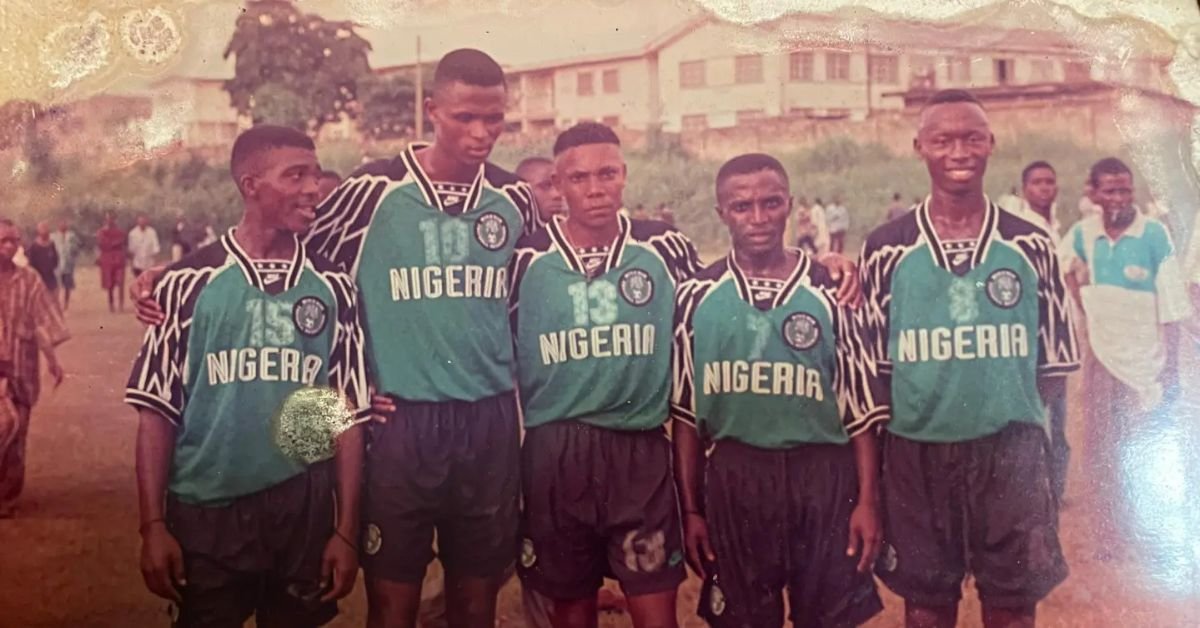
Thirty years after the death of Igeniwari George a teenage football star shot by an unknown assailant following a Rangers vs Stationery Stores match in Ibadan Nigeria still waits for answers This article revisits his rise his sudden death and the systemic failings his story exposed .
Introduction A Rising Star and A Tragic End
In 1995 Nigeria’s youth football scene was blessed with the emergence of a young talent named Igeniwari George Born in February 1979 in Port Harcourt he was the youngest in a family where football was more than a passion it was a way of life His eldest brother Perekebina played grassroots football Alari featured for Sharks FC and NAPC and even had a stint in Cameroon while his older brother Finidi George would later rise to international fame with Ajax and the Super Eagles Igeniwari too seemed destined for greatness but his story ended long before it began .
Also Read : Rivers State Emergency Rule to Be Lifted – Transitional Activities and Governance Restored
Early Promise and Football Roots
From his school days at Enitonia High School in Port Harcourt Igeniwari stood out for his skill and maturity on the ball He shared the pitch with names that would later make their mark like Victor Ezeji and Albert Yobo In 1994 coach Monday Sinclair saw the spark in him and brought both Igeniwari and Albert Yobo to Rangers International of Enugu By 1995 his talent had carried him onto the national stage as part of the Nigerian U17 squad that traveled to Ecuador for the FIFA U17 World Cup His path looked bright and full of possibilities .
The Game The Bullet and The Aftermath
On 9 September 1995 the Nigerian FA Cup quarter final between Rangers International and Stationery Stores in Ibadan turned chaotic A controversial penalty had given Rangers a narrow 1–0 victory sparking anger among Stores supporters who invaded the pitch In the chaos Rangers players were quickly bundled into their team bus to leave the hostile atmosphere At the back of the bus sat the quiet and promising teenager Igeniwari George .
As the bus made its way out of the stadium a gunshot pierced the air and struck Igeniwari in the back He was rushed to a hospital in Ibadan but the facility lacked even the most basic resources The doctors could not perform the surgery he needed because there was no running water The young footballer bled to death on a hospital bed at just 16 years old .
Unanswered Questions and Lack of Accountability
Thirty years later the question of who fired the bullet remains unanswered Was it a furious fan trying to attack the players Was it a stray shot from security forces attempting to restore order Or was it as some suggest a misfired warning shot from an armed official present at the game No official report has ever been published The Nigeria Football Federation and the league authorities offered no explanation No judicial inquiry has been made public The silence surrounding his death has left a wound that refuses to heal .
The Broader Failings Exposed
The tragedy of Igeniwari George was not just about the loss of a gifted teenager It exposed deeper cracks in Nigerian football at the time and sadly some of these issues still linger today Stadiums lacked effective crowd control measures and security arrangements often left players and fans vulnerable Medical facilities were either inadequate or completely absent with no ambulances or emergency protocols in place Even when lives were at stake as in Igeniwari’s case the system failed to provide the bare minimum .
Contrasts and What Might Have Been
Igeniwari was not an ordinary player He belonged to a golden group of young Nigerians whose talents carried the hopes of the nation Many of his teammates went on to have fulfilling professional careers at home and abroad His brother Finidi George reached the pinnacle of European and African football with Ajax and the Super Eagles For Igeniwari the foundation was there the pedigree and the exposure to succeed But his dreams were cut short before they could take flight .
Memory Reform and Legacy
As of 2025 it has been three decades since that tragic afternoon Yet remembrance has been minimal There is no tournament in his name no official memorial and no transparent investigation into his death His family continues to live with the weight of unanswered questions If there is to be a true legacy for Igeniwari George it must come through reforms Every stadium should have fully equipped medical teams and ambulances Crowd management should be a priority and every tragedy in sport must be met with open inquiry and accountability .
Conclusion
Igeniwari George’s story is more than a forgotten headline It is a reminder of the potential Nigeria lost and the vulnerabilities that still haunt the nation’s sporting culture Thirty years on the questions remain unresolved and the lessons remain urgent Until the truth is acknowledged and reforms are implemented his death will stand not only as a family tragedy but as a national wound in need of healing .