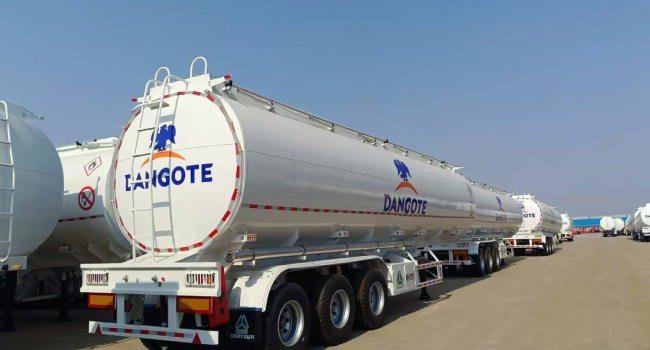
A Dangote Refinery official has expressed frustration over the massive markup in the LPG market, confirming the refinery sells cooking gas at N715/kg but is powerless to stop retailers from selling it for up to N2,000/kg a nearly 280 percent increase .
The Price Paradox Supply Solved Distribution Broken
The massive N715/kg to N2,000/kg price differential for Liquefied Petroleum Gas LPG or cooking gas in Nigeria has highlighted a profound failure in the countrys energy distribution and regulatory architecture A source from the Dangote Refinery speaking anonymously due to the sensitivity of the issue confirmed the refineries highly competitive ex-gantry price but admitted the companys inability to control the final price paid by consumers .
The official captured the core frustration of a nation struggling with escalating energy costs with a candid and striking admission If they sell at N2,000/kg after buying at N715/kg theres nothing we can do .
This statement from the heart of Nigerias largest private refinery project underscores a critical paradox The Dangote Refinery was specifically commissioned to increase domestic supply of petroleum products including gas to stabilize prices reduce import reliance and ensure affordability for Nigerian households Yet even with locally produced gas sold at a relatively low rate of N715 per kilogram kg the product is reaching consumers at a punitive markup often soaring to N2,000/kg and sometimes even N2,500/kg in parts of Lagos and other major cities .
Also Read : Clemency Appeal Father of Deceased Husband Requests Leniency Based on Good Behavior
Exposing the Middlemen and Profiteering
The yawning gap between the refinerys ex-gantry price and the market retail price points directly to the devastating role played by middlemen and distributors in the supply chain At N715/kg the official noted that even after factoring in reasonable logistical costs such as transportation and depot charges the final retail price should not exceed approximately N800/kg .
The fact that the price jumps from N715/kg to N2,000/kg a markup of over 180 percent even after deducting the N800 expected cost suggests significant profiteering and speculative trading among the various tiers of marketers .
These intermediaries purchase the gas in bulk from the refinery then add their own costs and exorbitant profit margins before selling to sub-distributors and local gas plant operators who subsequently add their markup This multilayered exploitation is effectively wiping out the price advantage achieved by Dangote Refinerys massive domestic production and lower ex-gantry price .
The consequence is dire for the average Nigerian family The high cost of cooking gas is reversing the nations progress towards adopting cleaner energy sources Many households are being forced to revert to cheaper polluting alternatives like firewood and charcoal compounding environmental and public health issues .
The Limits of Corporate Influence
The Dangote official’s sense of helplessness stems from the reality of market operations Once a product is sold to independent marketers the refinery essentially loses its legal and contractual leverage over the retail pricing structure Unless specific legally binding contracts with strict price caps and non-resale clauses are in place, companies like Dangote cannot dictate the price at which third-party retailers sell to the public .
The refineries role is to ensure supply and competitive pricing at the depot level The responsibility for regulating and policing the retail market falls squarely on governmental agencies specifically the downstream regulatory body The failure of this regulatory oversight is what allows market abuse and unwarranted price hikes to flourish .
There is a growing concern that this situation may not just be a matter of greedy middlemen but a symptom of a weak regulatory environment that lacks the teeth to enforce fair pricing and sanction price fixers and speculators .
The Regulatory Challenge and Way Forward
The current market dynamic poses a serious challenge to the government’s energy security and affordability goals Analysts suggest that for the benefit of local production to truly translate to consumer savings a two-pronged approach is necessary .
First the Dangote Refinery itself may need to explore models for deeper supply chain integration potentially by establishing a dedicated retail network or signing tighter contractual agreements with registered distributors that include price monitoring and punitive measures for excessive markups This strategy however risks accusations of monopolizing the market a concern already raised by some industry operators .
Second and more crucially the government through the relevant agencies must activate robust price monitoring mechanisms and take decisive action against market players engaged in arbitrage and price manipulation The current N715/kg ex-gantry price offers a clear benchmark allowing regulators to easily identify retailers whose prices are grossly disproportionate to the cost of logistics .
Ultimately the price stability of LPG a vital commodity in Nigerian homes rests not just on domestic production but on regulatory determination to ensure that the benefits of that production are not hijacked by profiteers at the expense of the masses The official’s candid statement is a warning sign that without intervention the consumers price relief is simply transferred into the pockets of the middlemen .
Disclaimer
Disclaimer The news information presented here is based on available reports and statements from an official within the Dangote Group concerning the price disparity in the Liquefied Petroleum Gas LPG market Readers should cross-check updates and official pronouncements from the Dangote Group the Nigerian regulatory bodies and other verifiable news outlets to confirm current market prices and regulatory actions .