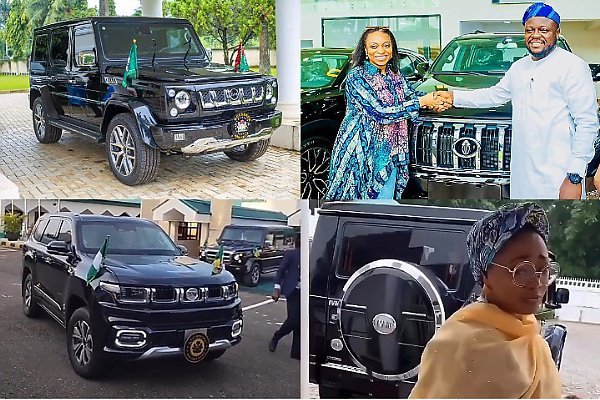
Explore the historical context and recent efforts by Nigerian government officials including governors and ministers to promote economic patriotism and boost the local automotive industry by committing to the use of made-in-Nigeria vehicles for official duties .
The Imperative of Economic Patriotism
Nigerias vision for a robust industrialised economy hinges significantly on developing its domestic manufacturing capacity One of the most visible and impactful ways government officials—from Governors to Ministers—can demonstrate commitment to this goal is by prioritising Made-in-Nigeria vehicles as their official means of transportation This is more than a simple matter of procurement it is a powerful statement of economic patriotism that has the potential to inject billions of Naira into the local automotive value chain conserve scarce foreign exchange and create thousands of jobs for Nigerian engineers and technicians .
The patronage of locally manufactured cars by top government functionaries signals confidence in the nations industrial capability directly challenging the deep-seated preference for imported luxury foreign brands that has long plagued the public sector .
A Look Back The History of Local Patronage
The use of domestically assembled vehicles by top government officials is not a new concept in Nigeria The policy first gained significant traction during the military administration of General Olusegun Obasanjo in 1976 By restricting the Head of State to a modest locally assembled Peugeot 504 which was the average mans car at the time the administration set a powerful example This policy encouraged both public servants and private citizens to patronise made-in-Nigeria vehicles leading to a period where up to 70 of cars on Nigerian roads were locally produced .
However this patriotic policy was largely abandoned by subsequent civilian administrations in favour of more exotic and expensive imported vehicles The brief period of compliance was replaced by an open preference for brands like Mercedes Benz Toyota Land Cruiser and Range Rover Even when President Obasanjo returned as a civilian president in 1999 the focus on local patronage for the presidential fleet was not sustained a trend that was quickly mirrored by state governors .
Renewed Commitment and Recent Policy Moves
In recent years there has been a significant resurgence in the call for and actual commitment to the Made-in-Nigeria policy largely driven by the prohibitive cost of foreign exchange and a pressing need to diversify the economy .
The Nigeria Automotive Industry Development Policy NAIDP initially introduced in 2013 sought to revive the local industry leading to the licensing of over twenty-five vehicle manufacturers and assemblers including prominent indigenous brands like Innoson Vehicle Manufacturing IVM and Nord Motors .
More recently the Federal Government has introduced initiatives such as the Nigeria First policy which mandates all Ministries Departments and Agencies MDAs to prioritise local goods and services in their procurement processes This move aims to formalise and enforce what was previously an often-ignored directive .
The Government Officials Leading by Example
While the overall adoption rate across all levels of government remains low some officials and state governments have demonstrably championed the cause by making deliberate purchases of locally manufactured vehicles for their official use .
- State Governors: There have been notable instances of state governors partnering with local automakers such as the government of Akwa Ibom State which in the past worked with Innoson Motors to procure vehicles for official use Such state-level patronage provides a crucial anchor market for local assembly plants allowing them to scale production and meet quality standards However despite these efforts many governors still maintain convoys featuring a range of imported luxury SUVs like the latest models of Lexus Toyota Land Cruiser and Prado highlighting the persistent challenge of implementation .
- Federal Agencies and the Legislature: A bill has been introduced in the Senate proposing to make it mandatory for at least 75 of all official vehicles purchased by public officials and civil servants to be genuinely manufactured in Nigeria not merely assembled from imported parts The proposed legislation which passed its second reading is intended to provide legislative backing to the governments directive making it difficult for subsequent administrations to reverse Furthermore agencies like the Nigerian Customs Service have publicly stated their intention to stop buying imported vehicles in favour of local alternatives The Armed Forces have also been noted for driving a significant number of Nigerian-made utility vehicles .
Challenges and Economic Benefits
The primary challenge remains the lack of consistent policy implementation and the elites penchant for foreign luxury This preference not only drains the national treasury of foreign exchange but also undermines the confidence of potential investors in the local industry .
However the benefits of full government commitment are enormous 1 Foreign Exchange Conservation: Mandating local procurement could save Nigeria over two billion dollars annually 2 Job Creation: It will significantly boost employment for auto engineers mechanics and supporting industry workers 3 Industrial Development: It forces local manufacturers to increase their local content and invest in advanced production facilities leading to genuine technological transfer and industrial maturation 4 Currency Stabilisation: Reducing the demand for foreign cars helps to strengthen the value of the Naira .
For the Nigerian automotive sector to truly thrive the governments current policy pronouncements must be unequivocally matched by the practical example set by Governors Ministers and all heads of MDAs in their daily official movement .
Disclaimer:
The news information presented here is based on available reports and reliable sources concerning government policy and official patronage of local vehicles Readers should cross-check updates and specific procurement details from official government gazettes or relevant news outlets .