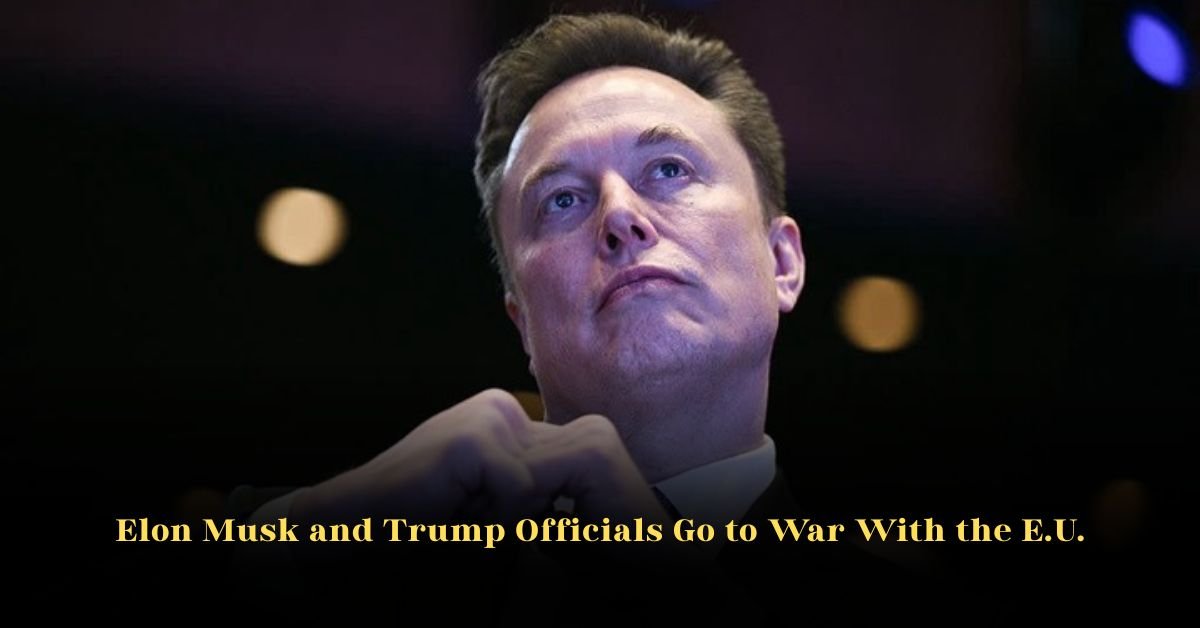
The relationship between the U.S. and Europe is now very tense because of technology rules. This started after the European Union (E.U.) fined Elon Musk’s social media company, X. Now, Elon Musk and some important people from the Trump Administration are publicly fighting the E.U. over its new internet rules. This fight is more than just a legal problem; it is a big difference in beliefs. The U.S. side values new technology and free speech. The E.U. side wants the internet to be safer and have clear rules that companies must follow.
The Digital Services Act and the $140 Million Clash
This fight got much bigger when the E.U.’s main group, the European Commission (EC), decided to fine X a large sum of $140 million. This was the first fine of its kind. The EC said X broke the rules of the Digital Services Act (DSA). The DSA is the E.U.’s full set of rules for very big online platforms like X. The EC pointed to three main problems where X did not follow the rules. First, they said X’s blue checkmark system is misleading. Users can buy a checkmark without proving who they are. This confuses people about which accounts are real and might lead to scams. Second, X failed to be clear about its ads. The rules say X must keep an easy-to-search list of all online ads, including who paid for them. The E.U. says this lack of clarity makes it hard to track people who spread bad information or run scams. Third, X made it too hard for approved researchers to look at its public information. This information is important for studying big problems like how false information spreads in the E.U. Mr. Musk reacted right away and was very angry. He reportedly said “Bulls***” and then called for the E.U. to be shut down, saying that power should go back to the individual countries. This strong response made the fine seem like an attack on countries’ freedom and digital rights, not just a simple business fine.
U.S. Officials Rally Against “Foreign” Regulation
Even though the X CEO and the former Trump administration have disagreed before, important Trump officials are now fully supporting Musk. They say the E.U. fine is a harmful attack on America’s power over the internet and on free speech rights. This teamwork turns a simple rule-breaking action into a big problem between governments. Important U.S. leaders spoke out against the fine. Secretary of State Marco Rubio publicly said the fine was “an attack on all American tech platforms and the American people by foreign governments.” FCC Chairman Brendan Carr agreed, saying the E.U. was only punishing X because it is a successful U.S. company. He called the E.U.’s strict rules a way of “taxing Americans.” Vice President J.D. Vance has also often spoken against E.U. tech rules. He previously warned Europe about “attacking” U.S. companies with what he sees as “censorship” and supports Musk’s view on internet freedom. This wave of strong words from Washington shows they plan to fight back against the E.U.’s rules on big American tech companies. This shows that the U.S.–E.U. tech relationship is getting much worse.
ALSO Read: America Pushes Back Against Donald Trump’s Call to Rename the NFL, Essentially Sports Poll Finds
Freedom of Speech vs. Accountability: The Core Dispute
The main reason for this global conflict is a basic disagreement on how the internet should be run. The European Commission says that the DSA rules are only about making platforms open and keeping users safe. They want big platforms like X to be responsible for bad things that happen because of their design choices for European users. They say the law is not about stopping or changing what people post. But Musk and his U.S. supporters see the $140 million fine and the DSA rules as a threat to online free speech. They think the E.U. is trying to force its strict posting rules on the whole world. Their argument is that the huge cost of following the rules and the danger of big fines will make American companies censor too much content everywhere. This means that American companies will try to follow the European rules worldwide—a ‘Brussels Effect’—which will then reduce free speech for everyone online.
Broader Geopolitical and Industry Implications
This big legal and political fight about X happens at a time when the U.S. and Europe already have problems with things like trade, safety, and immigration. The E.U.’s way of ruling technology, shown by the DSA, is a strong effort to create a worldwide standard for online safety and digital rules that cross borders. For American tech companies and politicians, the fine on X is a very important moment. It shows a move toward stricter rules worldwide by strong economic groups like the E.U. It also sets up future fights over how global technology should be run. The final result of this fight—which might go to the European Court of Justice—will likely decide how much American platforms will have to change their operations, how much freedom they will have, and how they will compete in Europe for many years.
Disclaimer
The news information presented here is based on available reports and reliable sources concerning the Digital Services Act enforcement and the resulting diplomatic tensions. Readers should cross-check updates from official news outlets and regulatory bodies for the latest legal and political developments.