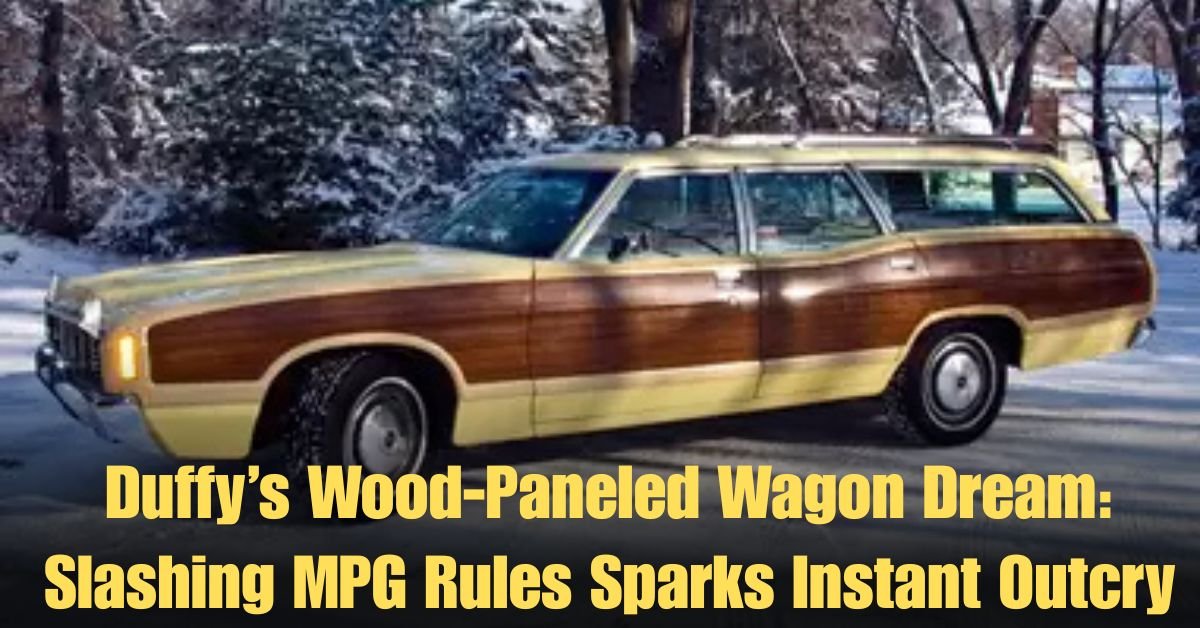
Transportation Secretary Sean Duffy recently fueled a major controversy to proposing a rollback of key federal Vehicle Mileage Rules. His colorful justification? Opening the door for the return of the classic wood-paneled station wagon. This proposal is announced by the Trump Administration that has been met not with nostalgia but with widespread ridicule and sharp Social Media Reactions.
This isn’t merely a debate about car aesthetics it’s a significant regulatory shift impacting Air Pollution and consumer choice. The core policy change involves dramatically reducing the required average fuel efficiency for new light duty vehicles.
The Policy Reversal. Why Efficiency is Being Slashed
The proposed new standards aim to loosen the Fuel Economy Standards established by the previous administration.
The Numbers: Efficiency Going in Reverse
The new proposal seeks to reduce the required industry fleet wide average for light duty vehicles by over 15 miles per gallon (MPG):
- Current Biden era rule. $50.4$ miles per gallon average.
- Proposed New Standards (by 2031). Roughly $34.5$ miles per gallon.
This change effectively provides manufacturers with the regulatory freedom to produce heavier less efficient vehicles paving the way for the gas guzzlers of the past.
Duffy’s Nostalgic Pitch
Transportation Secretary Sean Duffy discussing the proposed rules on CNBC embraced the idea of a Return to the Days of Yore. He highlighted the station wagon as the embodiment of the regulatory freedom they are seeking to “bring back choice to consumers.”
“This rule will actually allow you to bring back the 1970s station wagon maybe a little wood paneling on the side. maybe the station wagon is cool too.”
This image, reminiscent of classic American road trips and perhaps the fictional Chuck Griswold‘s family cruiser was intended to be a populist appeal but instead became the main target of online criticism. Though once a common sight, the traditional station wagon lost market share long ago to modern Minivans and SUVs and crossovers.
The Public Verdict. Nostalgia Not Shared
While Duffy may be nostalgic for vehicle like the Mercury Colony Park the public response was swift and overwhelming. Commenters on social media platforms universally rejected the idea of “moving in reverse,” arguing that proposal ignores modern safety environmental and technological advancements.
Key themes dominating the Social Media Reactions:
- Environmental Regret. Critics questioned the push for vehicles that contribute significantly to Air Pollution wondering why any administration would revive a technology the market happily left behind.
- Safety and Driving Experience. Many users pointed out that older, heavier vehicles were considerably less safe and harder to handle than today’s cars highlighting the dangers of promoting outdated automotive standards.
- Technological Shift. The suggestion of bringing back the 1970s station wagon was compared to reviving other obsolete technologies underscoring the perceived absurdity of prioritizing vintage style over modern efficiency.
Even political figures weighed in with Congressman Sean Casten lampooning the move by referencing the mythical Oldsmobuick Family Cruisers implying the effort is destined to fail in the modern efficiency focused marketplace.
The Broader Context. Looser Mileage Standards
The controversy isn’t just a political spat over style. They move to adopt looser mileage standards is significant regulatory action that could have real world consequences for fuel costs U.S competitiveness in the electric vehicle market and public health due to increased emissions.
Also Read: Mom Brings Baby to Auction House — and a 73-Year-Old Man Allegedly Makes an Offer
The Duffy’s Pipe Dream of wood paneled classics symbolizes the administration’s broader preference for deregulation and return to industry norms that prioritize size and power over efficiency and environmental stewardship.
FAQs
What is the main argument for slashing fuel economy standards?
Proponents argue that slashing fuel economy standards provides “choice to consumers” and replace regulatory burdens on manufacturers allowing them to produce wider variety of vehicles including larger and less efficient models.
How does this proposal relate to Air Pollution?
Lowering the Miles per gallon requirement directly results in the sale of more polluting vehicles increasing tailpipe emissions and contributing negatively to Air Pollution levels.
Why did the stop wagon disappear in the first place?
The traditional stop wagon lost favor as consumers preferred the higher ride height and better visibility and perceived safety of SUVs and crossovers and the passenger capacity of Minivans.
Disclaimer:
This article is an analysis of political and regulatory proposal and the subsequent public reaction. It contains opinions and commentary based on statements made by public officials and social media posts. The content is for informational and commentary purposes only and does not constitute official policy or regulatory guidance. Data on proposed fuel economy standards are based on figures cited in the public domain at the time of publication.