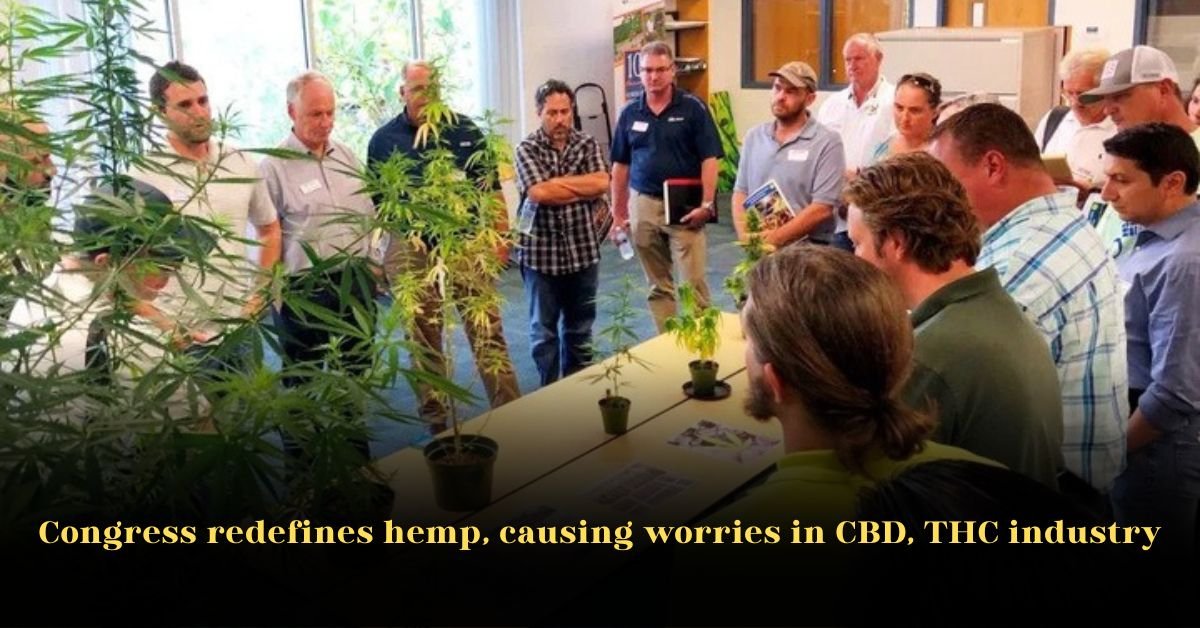
A small change in a recent government spending bill has created big worry in the legal cannabis world. Congress has updated the federal definition of hemp, and this change has restarted the debate about which cannabinoids are legal. Many people in the CBD and THCA industry fear that this new rule could hurt the multi-billion-dollar market and put thousands of jobs at risk. Businesses, farmers, and customers across the U.S. hemp industry are preparing for major problems that could affect the future of legal CBD.
Background: How the Legal Definition of Hemp Has Changed
The hemp industry grew after the 2018 Farm Bill made hemp legal. Under that law, hemp was allowed as long as it had less than 0.3% Delta-9 THC. Because of that rule, many hemp products—like CBD oils—were able to grow in a “gray area,” meaning not always clearly legal but still sold widely.
Now Congress has updated the rule. The new definition says that all types of THC must be counted in the 0.3% limit. This includes THCA, which is found in large amounts in raw hemp flower. THCA turns into Delta-9 THC when heated. Because THCA is naturally high in hemp, this new rule changes the legal status of many popular hemp products.
The Immediate Impact on the CBD and THCA Market
Counting THCA as part of the total THC amount has a huge effect. Most THC in hemp plants is in the form of THCA, not Delta-9 THC. When hemp is heated or processed, THCA becomes Delta-9 THC. Because of this, many hemp flowers and extracts will now go over the 0.3% THC limit.
The U.S. Hemp Roundtable says this could remove up to 95% of current hemp extract products from the market. This includes full-spectrum CBD oils, THCA flower, and many wellness products used by seniors, veterans, and other consumers. States like Kentucky, New York, and California, which have strong hemp industries, could be hit very hard.
Economic Consequences and Industry Reactions
The financial impact could be huge. The CBD and THCA industry supports more than 300,000 jobs, from farmers and processors to stores and manufacturers. Cities and states also earn tax money from this growing market. Industry groups warn that the new rule could make many popular hemp products suddenly illegal. This would destroy the system used to grow, make, and sell these products. Small businesses that invested money based on the 2018 Farm Bill rules could lose everything.
Many states already have their own hemp laws, including rules on testing, product strength, and age limits. A sudden change from the federal government could override these state rules. This may cause confusion for both businesses and customers who shop at local hemp stores.
ALSO Read: Another Terrible Decision’: RFK Jr. Stuns Analysts with Latest ‘Head-Shaking’ CDC Appointment
Lawmakers’ Perspective and the Critical Timeline
Senator Mitch McConnell (R-KY), who helped legalize hemp in 2018, supported this new change to reduce the spread of intoxicating hemp products like Delta-8 THC. The rule does not start right away. It was included in a temporary bill to fund the government, and it will begin on November 13, 2026.
This gives the hemp industry one year to fight back. Businesses and advocacy groups now have time to talk to Congress, explain how THCA works, and try to create new rules that protect hemp products. Many groups are preparing to push hard for changes before the rule becomes active.
The Road Ahead: Protecting the Future of Hemp
The next year will be very important for the future of hemp products in the United States. The industry must work to convince lawmakers to create better rules that understand the difference between THCA in raw plants and Delta-9 THC in finished products. No one knows yet whether the new rules will stay or be changed.
What happens this year could decide whether the U.S. hemp market collapses or becomes stronger with new laws that support both safety and business growth.
Disclaimer
The news information presented here is based on available reports and reliable sources concerning recent legislative changes. Readers should cross-check updates from official government and news outlets, as this regulatory landscape is subject to change before the November 2026 enforcement date.