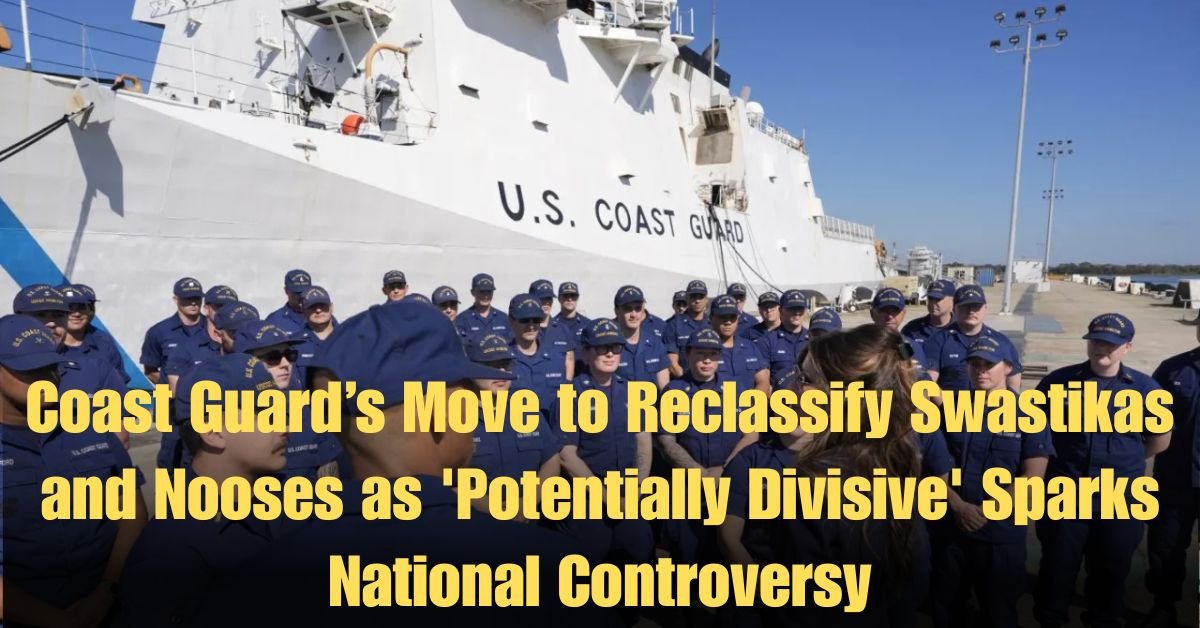
The U.S. Coast Guard a vital branch of the nation’s armed services under the Department of Homeland Security (DHS) found itself at the center of a national firestorm after internal Coast Guard guidelines appeared to soften the official designation of notorious hate symbols like the swastika and the noose.
New materials reviewed by USA TODAY on Thursday, Nov. 20, revealed that the updated Harassing Behavior regulation, set to go into effect on Dec. 15 labeled swastikas and nooses as “potentially divisive symbols,” a semantic change that immediately drew intense scrutiny from lawmakers, civil rights organizations, and the public. This language represented a departure from the service’s previous practice of investigating the display of such symbols as a “potential hate incident.”
The Policy Shift. From ‘Hate Incident’ to ‘Potentially Divisive’
The controversy stems from the explicit terminology used in the updated Coast Guard Guidelines on harassing behavior.
The document states.
“Potentially divisive symbols and flags include but are not limited to the following noose a swastika and any symbols or flags coopted or adopted by hate based groups as representations of supremacy racial or religious intolerance or other bias.”
While the document confirmed that displaying these symbols may still merit Harassment Investigations, the service made a critical procedural change: it no longer recognizes the “hate incident” as a specific category of misconduct. This procedural change, coupled with the new “potentially divisive” labeling, suggested to critics that the military branch was attempting to lower the severity and administrative urgency surrounding the symbols.
Alignment with Reworked Policies
The Washington Post which first reported on the guidelines, suggested that the reworked policies were an effort to Align with the Trump Administration’s push to narrow the definitions of hazing and harassment across the U.S. military. This connection to broader administrative changes only intensified the political dimension of the controversy.
Immediate Backlash and Official Denial
The public and political outcry was rapid and overwhelming forcing the U.S. Coast Guard and DHS officials into an immediate denial/refuting reporting campaign.
The Coast Guard’s Firm Stance on Prohibited Symbols
Adm. Kevin Lunday the Coast Guard’s acting commandant issued a strong statement asserting that the claims the service was relaxing its policy were “categorically false.”
In an email to USA TODAY Adm. Lunday emphasized:
- “The claims that the U.S. Coast Guard will no longer classify swastikas and nooses or other extremist imagery as prohibited symbols are categorically false.”
- “These symbols have been and remain prohibited in the Coast Guard per policy.”
- “Any display use or promotion of such symbols, as always will be thoroughly investigated and severely punished.”
Tricia McLaughlin assistant secretary at the Department of Homeland Security (DHS) also took to X to deny the reporting, calling the claims “unequivocally false.”
Advocates and Lawmakers Speak Out
The attempted semantic shift drew fire from key organizations and figures who argued that symbols rooted in genocide and lynching should never be minimized.
- Anti Defamation League (ADL): The nongovernmental organization which fights antisemitism to stated unequivocally that the swastika the most notorious of hate symbols associated with Nazism and white supremacy, “has no place in any workplace or our armed services ever.” The ADL further compared the emotional impact of the noose a painful reminder of the lynchings of Black Americans to that of the swastika for Jews.
- Rep. Bennie Thompson (D-Mississippi): The Congressman reacted strongly on X stating that Swastikas and nooses are not “potentially divisive,” but are instead “representations of genocide and lynching.”
The Symbolism and Statistics of Hate
The reason this language update generated such intense reaction lies in the deep, violent histories of the extremist imagery. Understanding this context is crucial for E-A-T Compliance and fully grasping the implications of the policy change.
| Hate Symbol | Historical Context & Target | ADL Classification |
| Swastika. | Main symbol of Nazi Germany represents the antiSemitism and white supremacy. Responsible for the Holocaust which resulted in murder of 6 million Jews. | Hate Symbol |
| Noose | The symbol of lynching, a historical practice of racially motivated murder and terror predominantly against African Americans in the U.S. | Hate Symbol |
Export to Sheets
According to reports on hate incidents a vast majority of targeted crimes are driven by bias against race, ethnicity or ancestry. Any move perceived as downgrading the severity of these symbols can be interpreted as a step backward in the fight against racial or religious intolerance within the military.
The Backtrack and Updated Policy
Following the enormous backlash the U.S. Coast Guard quickly moved to issue a new firmer policy late the same day. This swift action essentially reversed the problematic language of the initial document.
The subsequent policy unequivocally declared “Divisive or hate symbols and flags are prohibited.” This new edition specifically listed the noose and swastika among the prohibited imager to, reaffirming the service’s commitment to combating extremist imagery.
Also Read: Kalen DeBoer-Penn State Rumors Get Major Update From CFB Insider
This sequence of function the initial leak by The Washington Post and USA TODAY the strong denial by Adm. Lunday and DHS official and the final issuance of a clearer policy highlights the immense power of public scrutiny and the importance of maintaining an unambiguous stand against hate in all government institutions.
FAQs
What was the previous classification of swastikas and nooses?
Previously, the U.S. Coast Guard investigated the display of these symbols as a “potential hate incident.”
Is the display of a swastika or noose now permitted in the Coast Guard?
No. Acting Commandant Adm. Kevin Lunday explicitly stated that these symbols “have been and remain prohibited in the Coast Guard per policy” and their promotion will be “thoroughly investigated and severely punished.”
Why was the policy being changed to ‘potentially divisive’?
The Coast Guard was reportedly attempting to update its internal harassing behavior regulations to align with a broader military-wide review of hazing and harassment definitions, though the specific reason for choosing the “potentially divisive” language for these symbols remains highly contentious.
Call to Action
The swift correction of Coast Guard Guidelines proves that caution is paramount.
Share this article to ensure the public remains informed on the ongoing efforts to maintain respectful and professional work place free of extremist imagery within all branches of the U.S. military.
What are your thoughts on the initial language change? Leave a comment below and join the discussion!
Disclaimer
This article based on a draft of U.S. Coast Guard policy materials that concisely categorized the swastika and noose “potentially divisive symbols.” It is crucial to note that following public and official backlash, the Coast Guard quickly issued a revised and final policy. That subsequent policy unequivocally states, “Divisive or hate symbols and flags are prohibited,” and confirms that symbols like the noose and swastika are considered prohibited imagery and remain subject to thorough investigation and punishment.