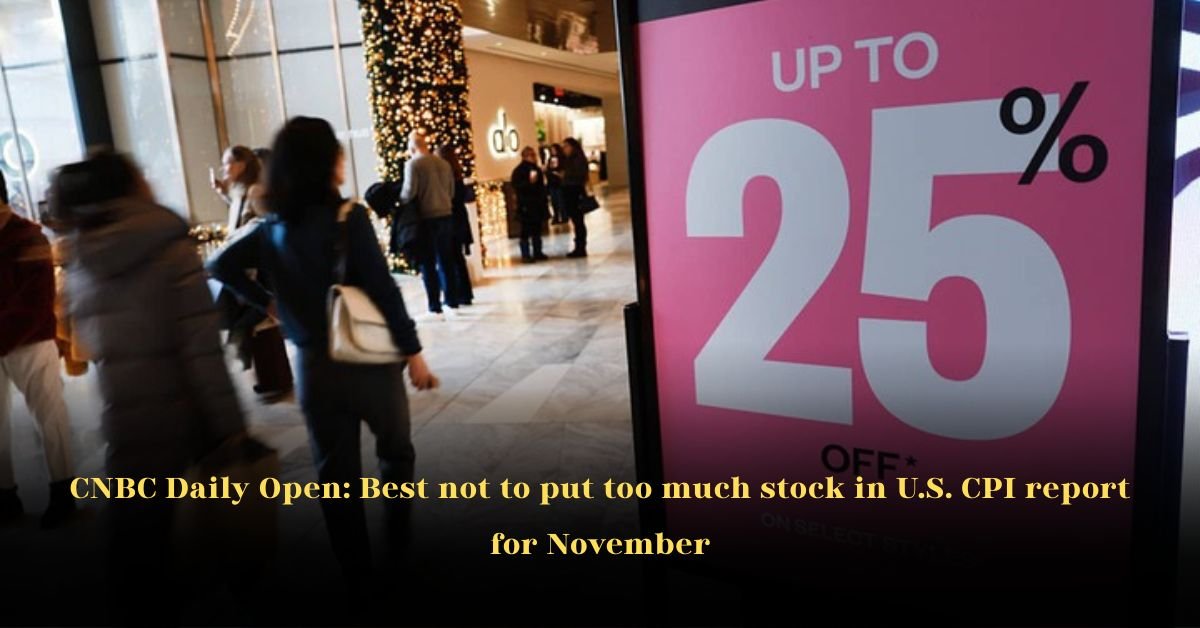
The latest CNBC Daily Open talks about a strange moment for the U.S. financial markets. On Thursday, December 18, 2025, Wall Street finally had a good day after losing money for four days in a row. The reason? A November Consumer Price Index (CPI) report that looked good for investors at first. But now, many experts say we should be careful: the November inflation numbers might not show the full picture.
Wall Street’s Relief Rally: A Tech-Led Comeback
The S&P 500 and the Dow Jones Industrial Average stopped their recent losses with a strong rebound. This was mainly because inflation was lower than expected and technology stocks did very well. Micron Technology shares jumped more than 10% after reporting very good earnings and giving positive guidance about AI memory demand. This good news for Micron, together with the CPI report, helped the Nasdaq Composite rise 1.38%. For investors worried about AI stock prices, lower inflation and strong company performance made this a good time to buy stocks.
Breaking Down the November CPI Numbers
The headline CPI for November 2025 was 2.7% higher than last year, which is less than the 3.1% many economists expected. Core CPI, which ignores food and energy prices, rose 2.6%—the lowest since early 2021.
On paper, these numbers suggest that the Federal Reserve’s policies and fewer effects from past tariffs are helping the economy reach the 2% inflation goal. But this report is unusual and not completely normal.
The “Whacky” Report: Why Data Gaps Matter
Experts are worried because the federal government was shut down from October 1 to November 12, 2025. This caused problems for the Bureau of Labor Statistics (BLS) when collecting data.
- Missing October Data: BLS could not collect any survey data in October.
- Imputation and Carry-Forwards: To make the November numbers, BLS had to use many September prices. This means nearly 50% of the items assumed prices did not change in October.
- Shelter Costs: Housing costs, which are about a third of CPI, looked too stable. This is likely because of these methods, not because prices really stayed the same.
Experts at TD Securities and Goldman Sachs say the December CPI report (coming in mid-January 2026) will give a real picture of inflation. Until then, the November numbers are “noisy” and might be too low.

Federal Reserve Outlook and Market Uncertainty
For the Federal Reserve, this report is both good and tricky. Lower inflation could support cutting interest rates in early 2026. But because the data is not complete, the Fed will likely watch carefully before making changes.
The market reacted quickly: stocks went up, and U.S. Treasury yields went down. Traders are hopeful that inflation is falling. But energy prices are still changing (utility gas went up 9.1%), and trade policies still affect the economy, so things are not completely stable.
Conclusion: Navigating the 2026 Economic Horizon
Even though the 2.7% inflation number looks good, the CNBC Daily Open reminds us to look deeper. The November CPI report is just a rough estimate. As we enter the new year, investors will focus on real data from December and company earnings to see if this market rally will last.
Disclaimer
The news information presented here is based on available reports and reliable sources. Readers should cross-check updates from official news outlets and financial advisors before making investment decisions.