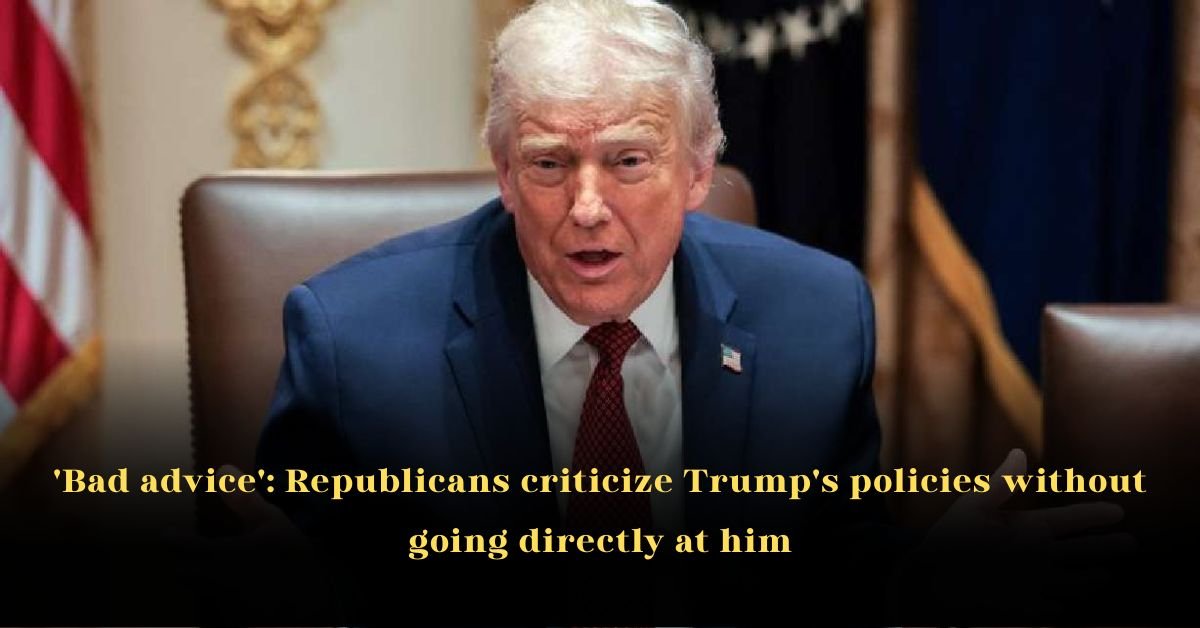
In US politics, a clear pattern is happening among Republican lawmakers. We are in the 2026 election time. Instead of directly attacking President Donald Trump’s most argued ideas, Republicans are doing something different. They are blaming “bad advice” from his advisors. His ideas include big new taxes on imports and investigating the head of the Federal Reserve. This lets Republicans disagree with the policy for moderate voters. But it also keeps the party together. They avoid angering Trump’s strong supporters.
The “Bad Advice” Rationale in Republican Discourse
This trend is common in Washington news. It protects the Republican Party. They say policy problems come from poor advice, not from the leader’s own mistakes. This lets Republican politicians carefully distance themselves. For example, the Department of Justice recently started looking into the Federal Reserve. Important senators did not blame Trump’s core ideas. Instead, they called the move “amateur hour.” They said it was advisors trying to hurt the Fed’s independence. This “bad advice” reason is now a standard Republican strategy. It lets the party keep working together without a public split.
Navigating Policy Tensions and Internal Dissent
This type of criticism is clearest where old conservative values fight with Trump’s “America First” actions. Big ideas, like taking over Greenland or using the military more in Venezuela, have caused much internal disagreement.
- Economic Strategy: Lawmakers who fear inflation blame “unnamed advisors” for the more extreme tax plans on imports. These taxes threaten global business.
- Institutional Norms: Complaints about hurting the courts’ independence are often aimed at people like Elon Musk or specific White House staff, not the President.
- The 2026 Midterms: The next elections are coming. This tactic helps Republicans in close districts. They can appeal to independent voters who fear too much presidential power. But they do not push away their core supporters.
Broader Political Context and Election Cycle Dynamics
This pattern shows a key change in American conservative politics. Republicans currently control the White House, Senate, and House. But their majority is very small. Any big fight inside the party could stop new laws. So, their political messaging has become more careful. By making a story where Trump is a strong leader sometimes given “bad advice,” the party protects his personal brand. This makes sure other candidates can still benefit from his support in the November 2026 elections. This is true even if those candidates vote against some of Trump’s policies.
ALSO Read: Lindsey Graham Returns to Israel for Talks with Netanyahu Amid Middle East Tensions
The Impact on Public Perception and Party Unity
This strategy keeps the party looking united. But it also makes politics confusing for voters. Critics say this indirect method avoids real responsibility. Supporters see it as a necessary tool for keeping the party together. As we watch the 2026 law-making period, how often we hear “bad advice” will be a sign. It will show how much arguing the party can handle before indirect criticism must become direct.
FAQ: Understanding the GOP’s Indirect Criticism Strategy
Why don’t Republicans criticize Trump directly?
Direct criticism often causes a bad reaction from Republican primary voters and from Trump himself. Saying problems are from “bad advice” is a safer Republican strategy. It keeps base support while letting them express policy worries.
How does this affect the 2026 Midterm Elections?
It lets candidates separate themselves from unpopular policies. This can win over moderate voters. But the candidates are not called people who “Never Trump.”
Which policies are currently causing the most Republican dissent?
Recent arguing points include investigating the Federal Reserve, the size of ICE immigration raids, and using the military for foreign capture operations.
Is this “Bad Advice” tactic new?
It was seen in Trump’s first term. But its regular use as a main political story is highest now in the 2026 election cycle. The stakes are very high to keep control of Congress.
Disclaimer
The news information presented here is based on available reports and reliable sources. Readers should cross-check updates from official news outlets.