Households
Authorities recommend practical evacuation essentials for people living in bushfire-prone areas. We asked residents of the Victorian town and surrounds what else they took – and what they wish they had remembered
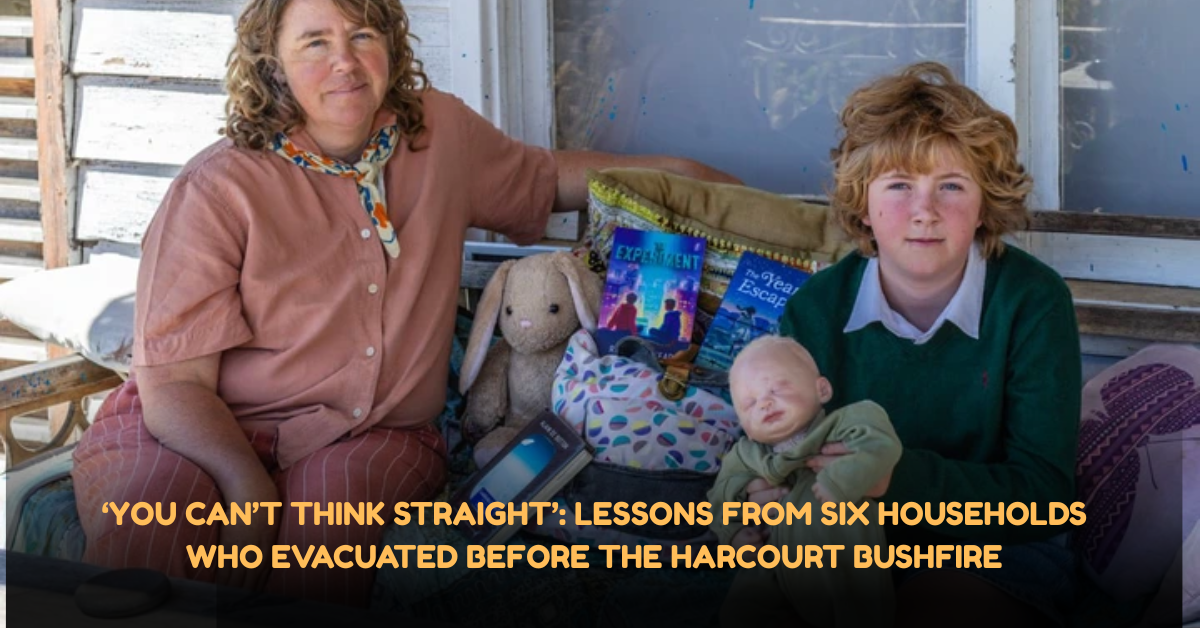
There is a precise moment when a person realises how quickly bushfire conditions can change. They’re unlikely to forget it. For Louise Cook-Tonkin, the moment was also ridiculous. The power had gone out, cut by a fire which started 15km north at Ravenswood, so she was trying to toast gluten-free bread on an outside table in 42C heat. Half an hour earlier she had driven through Ravenswood to their home in North Castlemaine and confidently told her husband, Bernie: “I reckon we’re good, it’s looking really clear.”
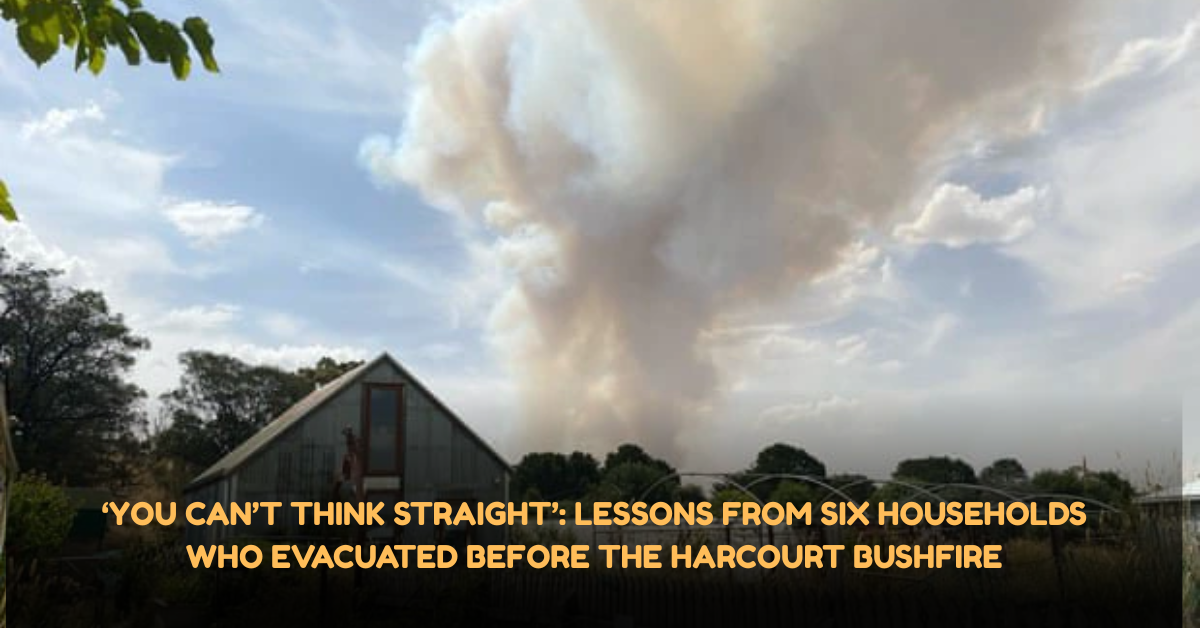
Now, as she turned the bread, she looked up and saw the first plume of a spot fire a kilometre away. Turning around, she saw another in the opposite direction.
Katherine Seppings
A five-minute drive away, Katherine Seppings was outside her house in Harcourt, wondering what action to take. She had intended to stay, but now she saw her neighbour’s Australian flag, which she had always disliked, furiously flapping first one way and then the other, indicating a sudden change in wind direction. A very bad sign.
As the wind swung, so did the fire – right through Harcourt.Both households had packed in advance and both houses survived, but others weren’t so lucky.
An estimated 289 houses in Victoria were destroyed by the fires that began on 7 January, including 48 in the Ravenswood-Harcourt fire which started under catastrophic conditions on 9 January.
Country Fire Authority’s
Conditions have since eased, but are expected to worsen again this week. The Country Fire Authority’s chief fire officer, Jason Heffernan, has stressed that peak fire danger for Victoria is in February, and urged those in bushfire-prone areas to remain prepared to leave. It’s vital to pack emergency supplies, says the CFA, but also to consider other belongings.
Guardian Australia spoke to six residents of Harcourt and the surrounding area about what they took with them – and what they would take next time.
Clothes for a longer absence
Cook-Tonkin and her husband keep their photographs in a bag by the front door all summer long, and their important documents in one folder. “When the 2019 fires happened we saw the level of loss, so we decided to take some beautiful paintings from friends, my husband’s carpentry tools and our hiking equipment,” Cook-Tonkin says.
Before evacuating they added final items: a change of clothes and some food.
ALSO READ: Alcaraz, Sabalenka make stuttering starts to Australian Open 2026
Vic Emergency app
“I felt very Zen because I’ve had that plan in place for 23 years and I had rehearsed it in my mind hundreds of times,” Cook-Tonkin says. Even so, she has since realised the plan needs updating.
“People want to get back in their house quickly but now the CFA advice is not to go back because of burning trees,” she says. That means packing for a longer stint away. So she will include a battery-operated radio – a CFA recommendation – since the power went out and the VicEmergency app was slow to load because of extra pressure on local mobile networks.
Last-minute additions
Zoë Condliffe’s fire alerts app wasn’t updating. She hadn’t realised until she inadvertently started driving towards the fire. That morning she had put together some basics: her passport, toiletries and overnight clothes. Now, back at the house and panicking, her last-minute additions became more random. She felt overwhelmed looking at the art painted by family members. If she couldn’t pack all, why even pack one? She decided her favourite clothes were the best bet: a vintage Laurentino top of her mother’s, a Zimmerman ballgown.
Urgently Needed
“At this point I realised that the reason you pack well in advance is because when things get more urgent you can’t think straight,” she says.
She rang her partner at work to ask what he most urgently needed and he began making a long list. Cutting him short, Condliffe grabbed his vintage Telecaster, a box of jewellery, her special dietary food, and left.What hit her later was that some people had only had a 20-minute gap between being told to leave immediately and being told it was too late. For them, fretting over beloved outfits was a luxury they didn’t have.
“My mum is one of the organisers of West End Resilience [a local network formed after the 2019 bushfires, which communicates through WhatsApp] and she gave a fire briefing the night before but it felt like overkill,” Condliffe says.
A chainsaw
The feeling of overreacting is a common response, but one to push through, say husband and wife Gus Read-Hill and Ash Tanner. They live south of Castlemaine at Golden Point, which was directly in the fire’s path before the wind changed. They spent the day before packing a fire kit, as well as cleaning gutters and cutting down a tree that was touching the house.