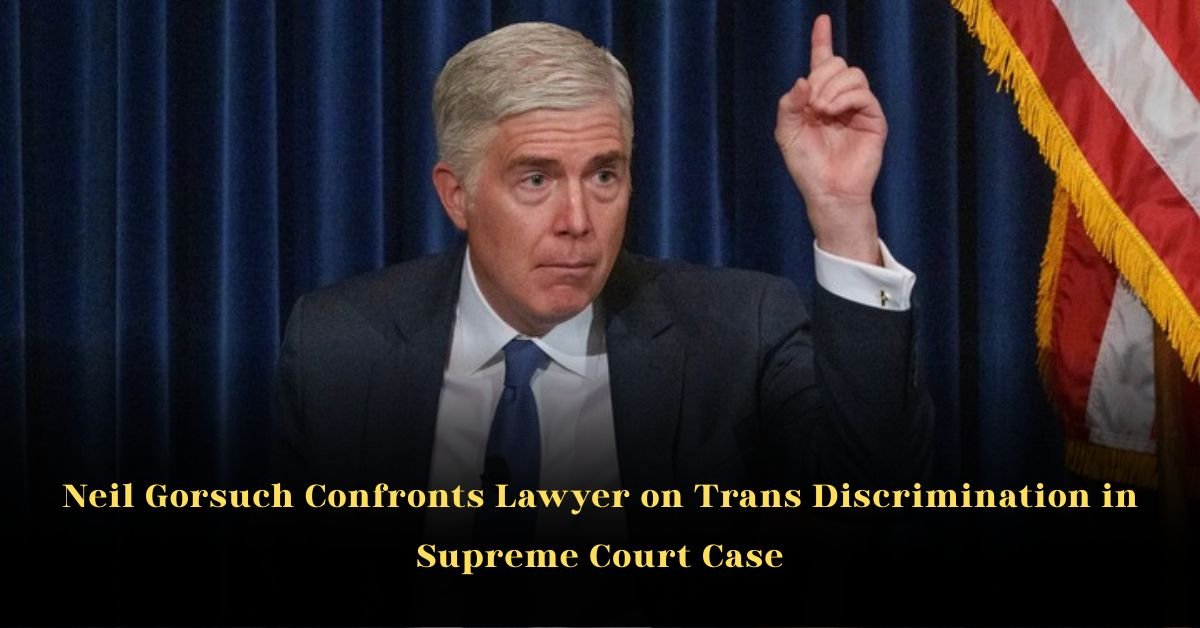
In a big Supreme Court hearing on Tuesday, Justice Neil Gorsuch asked strong questions to Idaho’s lawyer. He asked about the legal status of transgender people under anti-discrimination law. Gorsuch is a justice known for looking strictly at the words of laws. In 2020, he wrote a major opinion protecting gay and transgender people from job discrimination. Now, he is a key voice in this new case about transgender student-athletes.
Key Question from the Bench: A “Discrete and Insular Class”?
Justice Gorsuch was appointed by former President Donald Trump. He specifically asked Idaho’s lawyer if transgender people should be a legally protected group. His question focused on whether they are a “discrete and insular class.” This is a specific legal term. If a group gets this status, laws that target them face a harder legal test called “heightened scrutiny.”
Under constitutional law, if a group is a “suspect class,” the government must have a very strong reason for laws that treat them differently. Gorsuch’s questions talked about the long history of discrimination against transgender people in areas like immigration and family law. This was notable because it looked beyond just the definition of the word “sex” and into the community’s history.
The Broader Case and Legal Context
The Court is looking at two cases together. The main issue is whether federal law stops states from banning transgender girls and women from playing on female sports teams.
Idaho and West Virginia are defending their state laws. They say their laws are based on “biological sex,” not transgender status. They argue this is needed for fairness and safety for other female athletes. The people suing, including students Lindsay Hecox and Becky Pepper-Jackson, say these bans are illegal discrimination under federal civil rights law.
Data-Backed Insights: The Landscape of Transgender Rights in 2026
The importance of this case is shown by a lot of new state laws. As of early 2026, the legal situation for transgender Americans is very complicated:
- Legislative Surge: In 2025, a record 1,020 bills against transgender rights were introduced in 49 states. 125 of them became law.
- Public Sentiment: A 2025 Pew Research study found 66% of U.S. adults think transgender athletes should play on teams matching their sex at birth. This is up 8% since 2022.
- Discrimination Statistics: A 2025 survey found that 82% of transgender people reported bad experiences or discrimination since the November 2024 election.
ALSO READ: Vitalik Buterin Stuns With New Resilience Test for Ethereum: Details
A Pivotal Moment for the Court
Justice Gorsuch’s questions about the “discrete and insular” standard suggest the Court is thinking about more than just the words of a law. This legal idea is used to protect minority groups who have less political power.
The Court’s ruling is expected by June 2026. It will likely decide if the logic Gorsuch used in his 2020 opinion also applies to sports and education under Title IX. In that opinion, he wrote that you cannot discriminate against someone for being transgender without discriminating based on sex.
Frequently Asked Questions
What is “Heightened Scrutiny”?
It is a medium level of review courts use on laws. For the law to be okay, it must serve an important government goal and be closely related to that goal.
How does Neil Gorsuch usually vote on LGBTQ+ issues?
He is a conservative justice. But he surprised many in 2020 by writing the opinion that protected LGBTQ+ people from workplace discrimination. He often follows his “textualist” method, looking only at the exact words written in the law.
What happens if the Supreme Court rules in favor of Idaho?
A ruling for Idaho could keep similar bans active in over 25 states. It could allow schools across the country to exclude transgender students from sports teams that match their gender identity.
Disclaimer
The news information presented here is based on available reports and reliable sources. Readers should cross-check updates from official news outlets and the Supreme Court’s official docket.