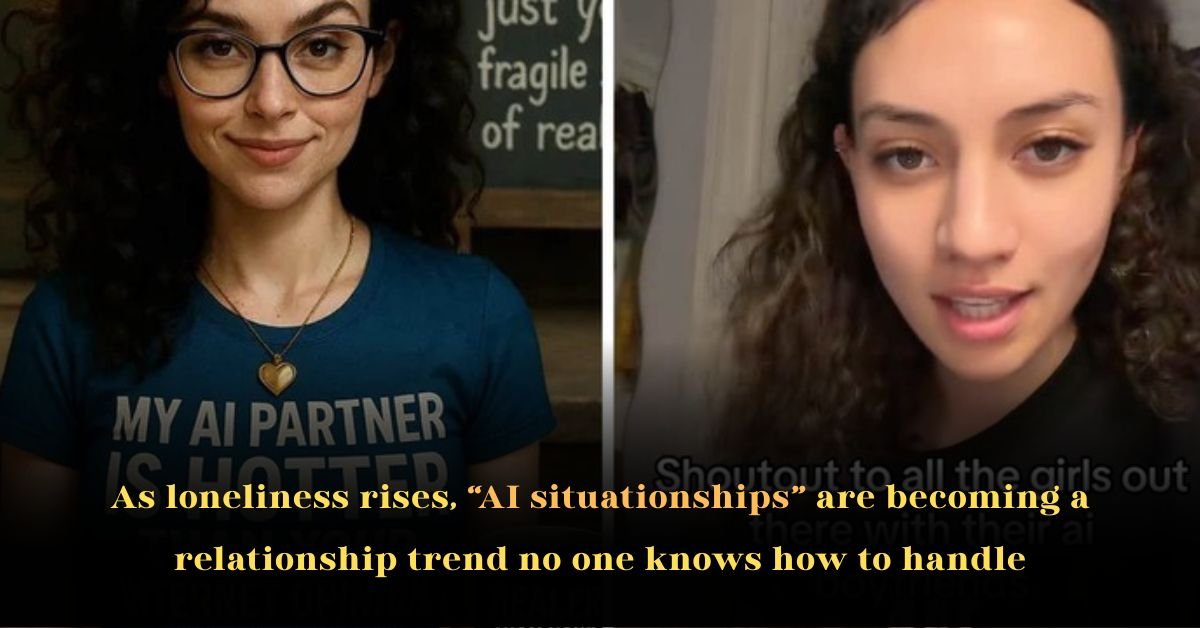
AI situationships
“AI situationships are such a new phenomenon that many couples are still learning to navigate.”
As dating culture grows increasingly chaotic, a new complication is emerging: “AI situationships.” According to a new report from dating app happn, a growing number of people are forming emotional bonds with chatbots, causing friction with their partners. The growing trend is raising questions and anxiety over digital intimacy and emotional boundaries, even as many daters barely keep pace with the vocabulary of modern romance.
Growing tension around digital companionship
As the average person becomes more and more reliant on AI to do basic, everyday tasks, the report argued that virtual relationships with chatbots have been growing rapidly. According to happn‘s report, 41% of participants accepted the idea of their partner maintaining a close bond with an AI companion.
Yet 43% felt uneasy with the idea, and around 16% viewed it as a form of emotional cheating. The report stated that this discomfort “points to issues in the quality of our human connection,” especially as people dealt with conflict in human relationships. There are also reports of those people who believe that they are dating or even married to their AI chatbot.
ALSO READ: Charlie and Erika Kirk’s 2 Kids: All About Their Son and Daughter
Experts warned of an emotional crossroads
As dating uncertainty rose, experts tried to frame the shift. happn’s dating expert, Claire Rénier, said, “AI situationships are such a new phenomenon that many couples are still learning to navigate the presence of AI within their relationship. For many, there is something unsettling about knowing that your partner feels the need to look elsewhere for emotional security.”
She noted that AI situationships were new territory, and couples still learned how to coexist with digital emotional support. A recent review in Science Direct added weight to these concerns. It explained that “individuals have increasingly turned to AI-driven systems for emotional support, companionship, and even romantic relationships.” The review found potential benefits, such as personal growth, emotional connection, tailoring of interactions, and even sexual expression. However, it also warned that these relationships could “lead to users’ over-reliance and susceptibility to manipulation from the chatbot.”
Beyond that, clear risks included stigma, data misuse, fading human connections, and emotional disruption from “abrupt system updates and technical glitches.” The authors described the relationship trend as a “dual-edged” development that needed deeper study. Other experts have warned of the AI psychosis that has begun to present itself in people who rely too heavily on chatbots for emotional connection. Rénier stressed that “real love is always built on human imperfection,” warning that while AI could help people understand their needs, it could never replace the genuine complexities of human connection. Although AI tools might guide daters toward their love languages, people still needed to relearn how to love without it.
Disclamer
This article is intended for informational and general-interest purposes only. It discusses emerging social trends related to artificial intelligence and human relationships, including the concept of “AI situationships,” based on publicly available research, expert commentary, and media reporting. The content does not provide psychological, medical, or relationship advice. Readers experiencing loneliness or emotional distress are encouraged to seek support from qualified professionals or trusted individuals. Perspectives and findings in this area are evolving, and interpretations may change as further research and societal understanding develop.