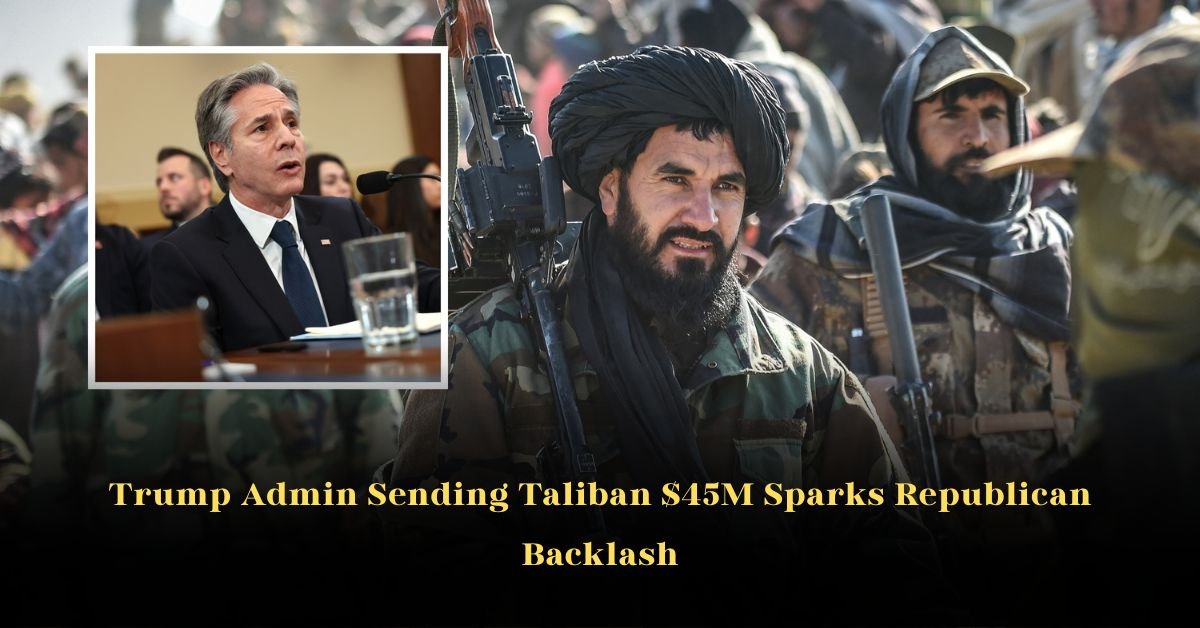
The Trump administration sent about $45 million in cash to Afghanistan. This news made many Republicans very angry. They are now asking hard questions about how the U.S. government gives money to other countries and who checks that the money goes to the right people.
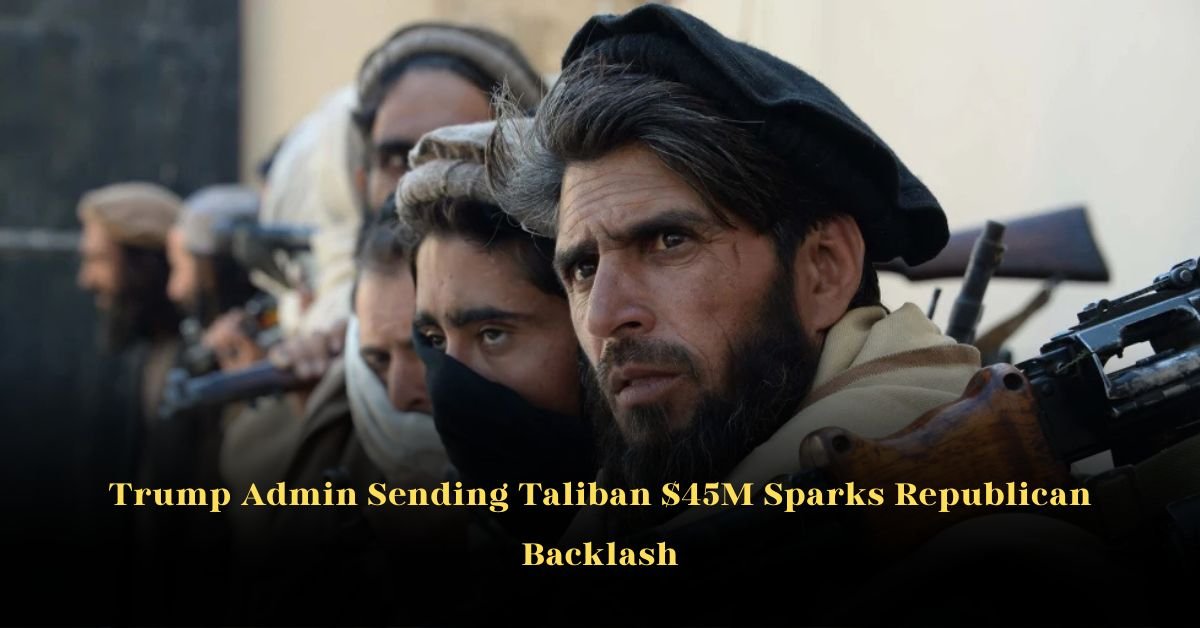
Lawmakers and war veterans are worried because the money was sent as physical cash. They fear it might go directly to the Taliban, which the U.S. still calls a terrorist group.
What Prompted the Cash Shipment Controversy?
News reports say the U.S. Department of State sent the $45 million on a recent Monday. An Afghan official who is against the Taliban said the money was “freshly printed”, which made the situation seem even more alarming. Sending physical cash is the big problem. It’s very hard to track who gets the money, unlike online or bank payments. This makes people worry a lot about misuse and not knowing where it goes.
This way of sending money is strongly criticized. The U.S. government had said before that financial help would only go through trusted international and non-government groups to help Afghan civilians. Critics say that even if the money was meant for good, such a large amount of untraceable cash will likely be taken by the Taliban, who are known for taking a cut of aid.
The Political Firestorm: Republican Outcry
This news caused a lot of anger, especially among Republican politicians and news people. For example, U.S. Representative Tim Burchett quickly went online to demand that his bill, which would stop U.S. money from going to the Taliban, be passed quickly. Many conservatives feel that giving any money—even if it’s indirect—to the Taliban is a betrayal of U.S. security and a moral mistake. The main reasons for the anger are two:
- It’s wrong to fund a group that is accused of terrible human rights abuses.
- There is no way to check how American taxpayers’ money is being spent.
People are angry, asking why the U.S. would help an enemy it fought for 20 years. Critics see this as harming U.S. interests and making the Taliban stronger.
Broader Context: The Dilemma of Aid in Afghanistan
Since the Taliban took over in August 2021, the U.S. and other nations have given billions of dollars in aid to Afghanistan. The goal is to stop a terrible hunger crisis. This money is usually sent through organizations like the UN to help with food, medicine, and rebuilding.
But it’s very hard to work when the Taliban are in charge. Watchdog groups have always warned that it’s nearly impossible to be sure that the money is not stolen or taxed by the Taliban. Past investigators have told Congress they couldn’t promise that aid was reaching only the people it was meant for.
The recent $45 million cash shipment makes this concern much bigger. While the Afghan people need help, sending a lot of untraceable cash makes people fear that the U.S. is accidentally helping to fund the Taliban’s government, which allows the group to use its own money for other things.
ALSO Read: Little House on the Prairie Star Melissa Gilbert Calls Out Overuse of Word Iconic
The Path Forward: Congressional Action and Policy Reevaluation
The immediate next step is the effort by Representative Burchett to make new laws that will stop U.S. money from reaching the Taliban. This problem is expected to start a major discussion about all U.S. foreign aid policy, how to check the spending, and what the State Department should do when working in countries controlled by groups that are considered enemies.
International groups will likely ask for a big change in how aid is given. They may push for other ways, like giving goods (like food or blankets) instead of untraceable cash, or using only highly trusted small aid groups. The goal is to make sure the aid helps the people who need it without helping the militant Taliban government.
Why This Matters
This event is very important for U.S. policy, national security, and what the U.S. stands for.
- Transparency and Accountability: Using cash transfers creates a nightmare for tracking the money, making it impossible to check if aid is financing terrorist groups or corruption.
- Moral and Political Risk: Giving money to the Taliban, a group known for human rights abuses (especially against women and girls), carries a high moral risk and damages U.S. reputation at home and around the world.
- Policy Implications: The massive anger could force a complete change in how foreign aid is planned. The focus might shift to stricter checking, setting clear rules for the aid, and finding new ways to deliver help so that humanitarian support does not strengthen the militant government.
Disclaimer
The news information presented here is based on available reports and reliable sources concerning the alleged cash transfer and subsequent political reactions. Readers should cross-check updates from official news outlets and government statements.