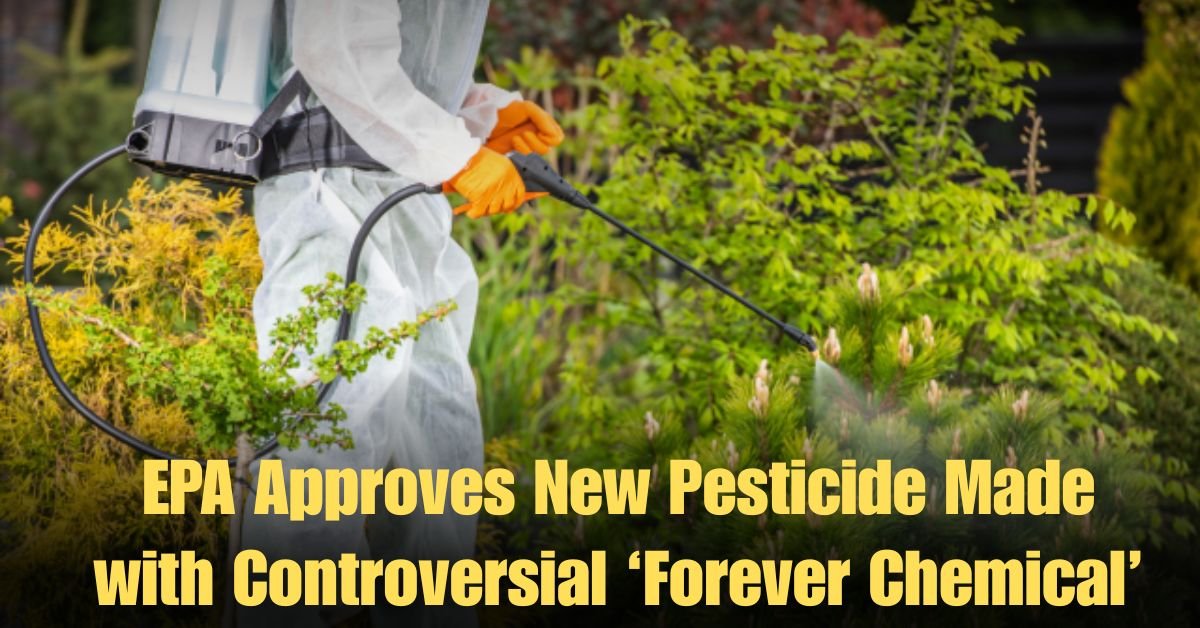
The Trump administration through the Environmental Protection Agency (EPA) has sparked intense backlash by moving to approve a new pesticide containing PFAS class of chemicals notoriously labeled as “forever chemicals.” This decision which marks the fifth PFAS ingredient proposed for approval during this administration’s term has placed the agency at the center of a deepening debate over agricultural yields, public health and environmental safety.
The product which contains the active ingredient isocycloseram is slated for wide deployment across agricultural crops like corn, soybeans and wheat as well as for use on turf, ornamentals and various commercial and domestic sites. While the EPA touts the chemical as a necessary tool for farmers battling pest resistance scientists and environmental activists warn that this gain comes at a grave cost to long term health.
The Science of Persistence. Why PFAS are ‘Forever’
PFAS (Per and Polyfluoroalkyl Substances) earned their moniker “forever chemical” because of their incredibly stable carbon fluorine bond. This stability makes them resistant to breaking down in the environment leading to their persistence in soil, water and even the human body.
The concern over isocycloseram lies in its role as a persistent fluorinated compound.
- Environmental Risks. While the EPA may classify this specific chemical as “ultrashort chain,” meaning it doesn’t accumulate in the body as much as older PFAS experts caution that it is still highly environmentally persistent. It can contaminate waterways and is highly mobile in the environment to making it difficult to filter out.
- Targeted Use.The pesticide is being approved as a broad spectrum insecticide to combat tough pests like the tarnished plant bug and Colorado potato beetle offering a new mode of action (MOA) for pest resistance management key argument for its Pesticide Approval.
Health Consequences. The CDC’s Warning
The growing presence of PFAS in the environment potentially exacerbated by approvals like this one raises serious Health and Environmental Risks.
The CDC (Centers for Disease Control and Prevention) and other health studies have established concerning links between PFAS exposure and a range of adverse health outcomes
- Cancers. High risk of cancers including kidney and testicular cancer.
- Reproductive Issues. High risk of situation like pregnancy induced hypertension and preeclampsia.
- Child Development. Developmental effects in children including low birthweight.
- Metabolic Issues. Raised high cholesterol and potential liver damage.
Furthermore internal EPA documents on isocycloseram reportedly highlighted potential harms including reduced testicle size and lower sperm count in test subjects pushing activists to demand greater child safety buffers in the approval process.
The Global Divide. U.S vs European Union (EU) Ban
The new pesticide approval to highlights stark regulatory discrepancy between the US and its international counterparts. Critics including former Secretary of the Department of Health and Human Services (HHS) candidate Robert F. Kennedy Jr. have pointed to a 2019 study revealing that the US continues to permit the use of numerous chemicals already banned in the European Union (EU) Ban).
Kennedy’s former “Make America Healthy Again” agenda specifically promised to review the standards for chemicals and pesticides to implement stricter restrictions. This comparative data emphasizes the need for a global realignment on chemical safety standards:
| Regulatory Jurisdiction. | Stance on Restricted Pesticides | Approach |
| European Union (EU). | Has banned out over 70 pesticides still used in the U.S. | Prioritizes precautionary principle burden of proof is on the industry. |
| United States (U.S.). | Continues to approve chemicals like PFAS component isocycloseram. | Follows risk benefit analysis under the Trump administration. |
FAQs
Is the new pesticide, Isocycloseram safe for food crops?
The EPA asserts that no human health risks of concern were identified when isocycloseram is used strictly according to the registered labels and mitigation measures are followed. However the environmental health supporter contest this citing its persistence and documented toxicity risks unacceptable long term dangers.
How can I reduce my exposur ‘forever chemicals’?
Exposure can arise through pollute water, food and household products. Key steps include using verify water filters replacing non stick cook war and supporting policies that limit the use of these persistent chemicals in build and agriculture.
Call to Action
The approval of pesticide containing a forever chemical is critical decision that affects us all the food on our tables to the water we drink. The need for comprehensive and precautionary approach to chemical regulation has never been clear.
What do you think EPA’s decision?
Should agricultural crops be safe at the expense of potential long term Health and Environmental Risks?
Comment below with your thoughts and subscribe to our newsletter for crucial updates on regulatory changes clean water advocacy and more ways to hold decision makers accountable!