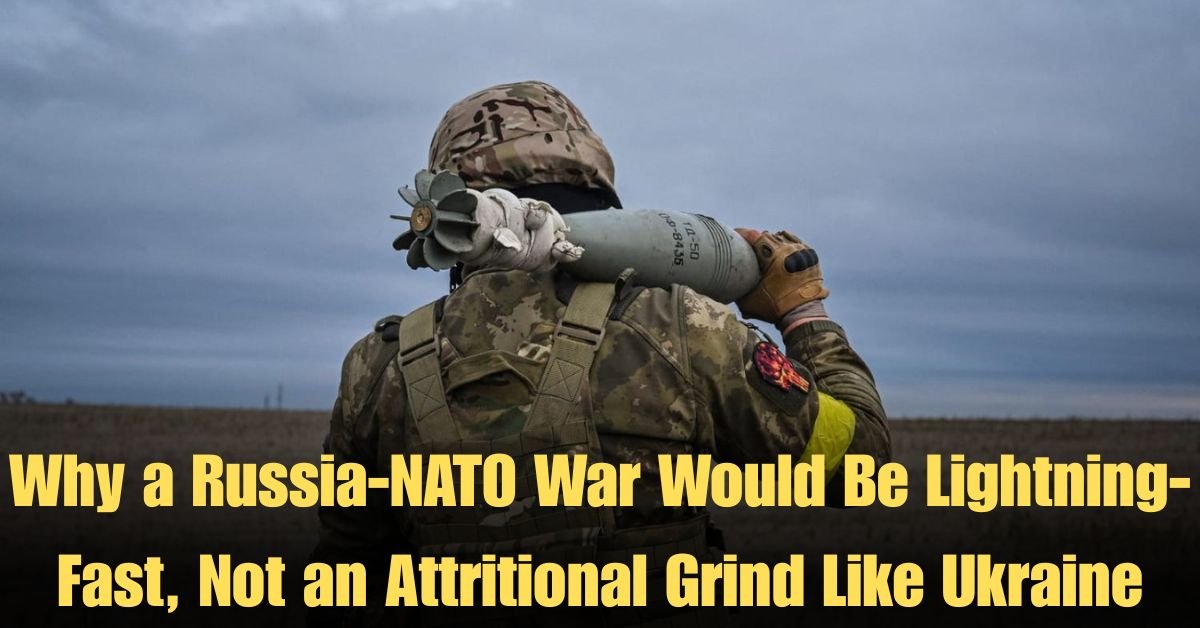
The brutal conflict in Ukraine has been dubbed “World War I with drones” a slow, static attritional warfare defined by trenches and relentless artillery duels. However, military strategists are issuing a stark warning any future war between a reconstituted Russian military and NATO would be dramatically different potentially far faster and more devastating.
This critical difference is what is driving the urgent and historic push by Germany to transform its military, the Bundeswehr and assume a leading role in the European Defense landscape.
The Critical Misconception: Ukraine is Not a Template
According to U.K based defense strategist Nicholas Drummond, drawing conclusions about a future Russia-NATO conflict solely from the Ukraine War is a dangerous mistake.
“It’s very easy to draw the wrong conclusions from the war in Ukraine,” Drummond stated. The current conflict is defined by the inability of both sides to execute large-scale, deep maneuvers effectively. This has led to the grinding, static lines of contact we see today.
The Shift to a “Fast Paced, Maneuverable” Conflict
A confrontation between Russia and full NATO coalition would activate entirely different military doctrines and capabilities.
- Fast Paced, Maneuverable War. Unlike the slow nature of the fighting in Ukraine a future war against NATO member would be characterized by rapid movement and maneuver warfare the ability to swiftly bypass, disrupt and destroy enemy formations.
- Air Power. The most significant shift would be the immediate and overwhelming use of Air Power in the initial opening weeks. NATO‘s vastly superior integrated air defense systems and air superiority fighters would force Russia to commit its air assets and long range missiles immediately leading to a much shorter albeit more intense, initial phase of fighting.
- Focus on Shock and Disruption. The goal of NATO would be decisive intensity conventional response to frustrate an assault and demonstrate intense force to avoiding the protracted War of Attrition.
This scenario emphasize why European leaders are urgently pushing initiatives like the EU’s Defense Readiness 2030 plan to prepare for possible conflict by the end of the decade.
Germany’s Historic Military Transformation
The most tangible response to this shifting threat assessment comes from Berlin. Under the direction of German Chancellor Friedrich Merz, Germany is undergoing a profound military transformation.
Record Military Spending and Procurement
Germany is set to become one of the world’s highest defense spenders. By 2029 its Military Spending/Budget is projected to reach an estimated 153 billion euros (or $178 billion) annually positioning it as the world’s third highest spender behind the U.S. and China.
This massive financial commitment will focus on three key areas:
- Procurement/Investment: A massive scale-up in artillery, munitions, and cruise missiles.
- Air Defense: Significant investment in integrated air defense systems, essential for surviving the “fast-paced” initial phase of a conflict.
- Personnel. Dramatic increases in Bundeswehr Troop Numbers/Recruitment.
Data Point. Plans aim to swell the Bundeswehr‘s ranks from the current 182,000 to 260,000 troops over the next decade with lawmakers weighing legislation that includes questionnaires and medical screening for 18 year old men.
Germany as NATO’s European Pillar
NATO operates as a coalition, but Germany‘s burgeoning military capacity is expected to deliver a significant amount of “mass” and take on the main mantle of security against future threats.
Also Read :Victim Claims Police Tear-Gassed Them Aided Bandit Escape at Station
Rafael Loss a policy fellow at the European Council on Foreign Relations (ECFR) confirms that Germany’s trajectory is closely tied to fulfilling NATO capability targets in three areas recruitment and retention of personnel, procurement and infrastructure. Germany is seen by many Allies as the anchor that can help deliver the collective defense capabilities required to deter Russia.
- Drummond’s Warning: Nicholas Drummond believes this timeline could be significantly shorter potentially much sooner than a decade if key allies like China, North Korea and Iran intensify their support for Moscow. This external support particularly China’s “prodigious rate” of producing armored vehicles and missiles directly affects the timeline for a renewed threat to the European Defense/Security Landscape.
FAQs
Why would a Russia NATO war be faster than the Ukraine War?
The Ukraine War is War of Attrition with limited maneuver. A Russia-NATO war would involve the full commitment of NATO’s advanced technology coordinated command structure and overwhelming Air Power leading to a much fast paced maneuverable conflict designed for rapid decision and decisive conventional response.
What role will Germany’s Bundeswehr play?
With plans to invest heavily and increase Troop Numbers to 260,000 the Bundeswehr is expected to become a central pillar of NATO‘s conventional defense in Europe to providing critical mass and high end capabilities (artillery, air defense) that other European Allies will rely on.
What is Defense Readiness 2030 plan?
Defense Readiness 2030 is European Union plan intended to coordinate military preparations and boost capabilities across member states to be ready for potential security threats posed by Russia by the end of the decade.
Disclaimer
This article contains analysis and commentary based on the opinions and expertise of named defense strategists and policy fellows. The content presented informational, discussion purposes only and is not a statement of fact regarding future military operations or geopolitical certainty. The scenarios discussed represent potential outcomes and threat assessments and should not be construed as definitive predictions or official policy positions of NATO, Germany or any other government.