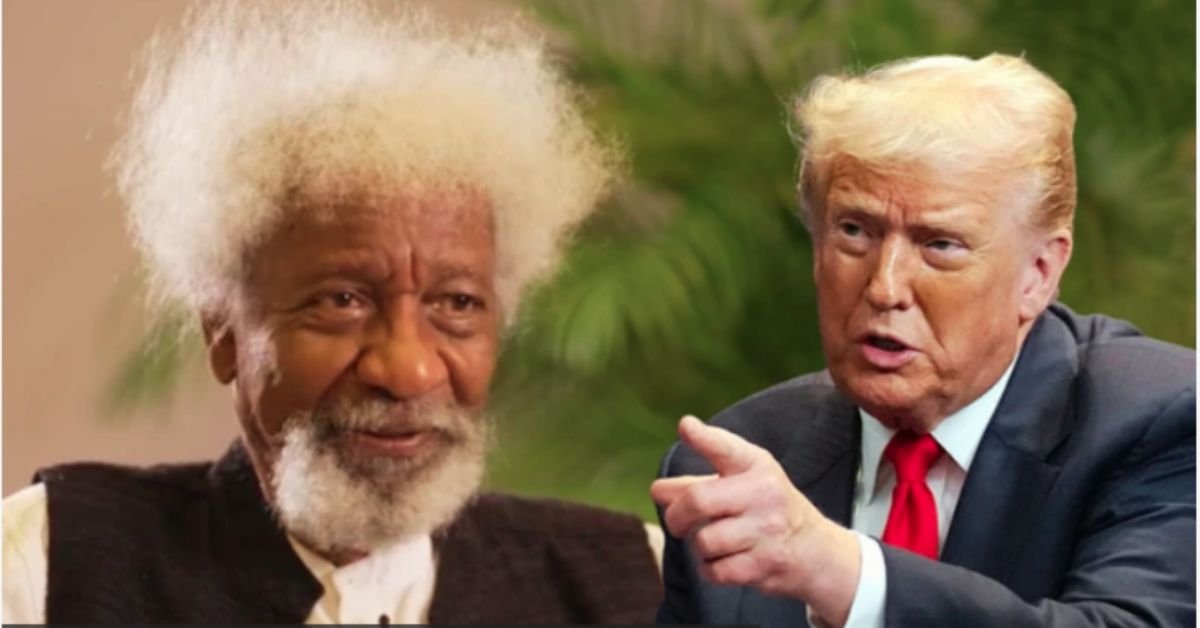
Nobel Laureate Wole Soyinka sharply criticized President Donald Trump specifically targeting his approach to international military intervention and humanitarian aid arguing such pronouncements must be handled with strategic caution .
The Nobel Laureates Stance on International Rhetoric
The Nobel laureate in Literature Professor Wole Soyinka known globally for his fierce critiques of authoritarianism and his deep involvement in socio-political commentary has once again turned his analytical lens towards a major world figure President Donald Trump The essence of Soyinkas criticism revolves around the potentially destabilizing effect of making casual public pronouncements regarding military or humanitarian intervention in sovereign nations .
The core statement attributed to Soyinka is a sharp rebuke of a perceived lack of strategic nuance in Trumps international communication You Dont Just Open Your Mouth And Say Im Coming To Help You .
This quote while concise carries significant weight and points to a fundamental disagreement with what Soyinka views as a reckless and unsophisticated approach to global diplomacy and military engagement It suggests that in the complex landscape of international relations especially concerning matters of military presence or aid verbal commitments must be backed by careful planning and a thorough understanding of local political dynamics .
Also Read : Singers Tiwa Savage And Yemi Alade End 7-Year Feud
The Context of Military and Humanitarian Intervention
Soyinkas comment is particularly relevant in the African context where he has been a vocal champion of democracy and human rights Military interventions even those presented as humanitarian missions are often viewed with suspicion across the continent due to a long history of colonialism Cold War proxy conflicts and neo-colonialist interests .
When a major global power leader such as a US President makes statements about helping or intervening it can be interpreted in several ways .
- As a Threat To the sitting government of the target nation it is often seen as an infringement on sovereignty and a precursor to regime change or destabilization .
- As False Hope To oppressed groups or dissidents it can prematurely raise expectations of immediate rescue only to be followed by disappointment if the commitment is not followed through .
- As Strategic Leakage In a military context announcing a plan before its execution can compromise its effectiveness and endanger the potential beneficiaries or the intervening forces themselves .
Soyinka an intellectual deeply familiar with the consequences of careless rhetoric on real-world conflicts is essentially advocating for a more measured discreet and strategically sound foreign policy He argues that public off-the-cuff remarks about military action do more harm than good increasing tensions without ensuring an effective or safe outcome .
Diplomacy vs Public Rhetoric The Trump Factor
Donald Trumps presidency was often characterized by an unconventional approach to diplomacy He frequently communicated major policy shifts strategic thoughts or critiques of foreign governments via public rallies television appearances or social media platforms bypassing traditional diplomatic channels This style was often celebrated by his supporters as transparent and direct but widely condemned by foreign policy experts career diplomats and figures like Soyinka as erratic and dangerous .
The Nobel Laureates critique highlights the dangers inherent in this style when applied to military matters
- Undermining Alliances Publicly announcing intentions can disrupt coordinated efforts with allies who may be operating with more subtlety on the ground .
- Lack of Coherent Strategy Spontaneous announcements suggest a decision-making process driven by immediate impulse rather than long-term strategic analysis .
- Fueling Polarization In nations facing internal conflicts an external leaders pronouncement can be used by opposing factions to either legitimize or delegitimize their cause thus fueling the conflict further .
Soyinkas call for prudence encapsulated in the phrase You Dont Just Open Your Mouth And Say Im Coming To Help You is a call for a return to traditional careful and confidential statecraft especially concerning sensitive issues of military intervention In his view a superpowers pronouncements are not mere opinions they are policy signals that carry immense power and consequence demanding sobriety and strategic calculation .
The Importance of Strategic Silence
For Soyinka the appropriate response to a military or humanitarian crisis that may require foreign support is often strategic silence or at the very least communication through established confidential channels He suggests that genuine commitment to help is demonstrated through quiet effective action preparation and coordination not through loud public declarations designed to generate headlines .
This perspective is rooted in the practical realities of intervention If a mission is necessary its success often depends on surprise swiftness and an accurate reading of the local political temperature all of which are compromised by premature public announcements The focus of the criticism is not necessarily against the concept of intervention itself but against the manner in which it is signaled and handled by the leadership of a global power .
In essence Soyinka is asserting that leadership on the world stage demands responsibility in rhetoric The military threat he perceives is not just from external actors but from the internal self-inflicted damage caused by a great power that fails to speak with the precision and restraint required by its own global influence .
Disclaimer
The news information presented here is based on available reports and reliable sources concerning the public comments made by Wole Soyinka regarding Donald Trumps rhetoric Readers should cross-check updates and original statements from official news outlets and publications for complete context .