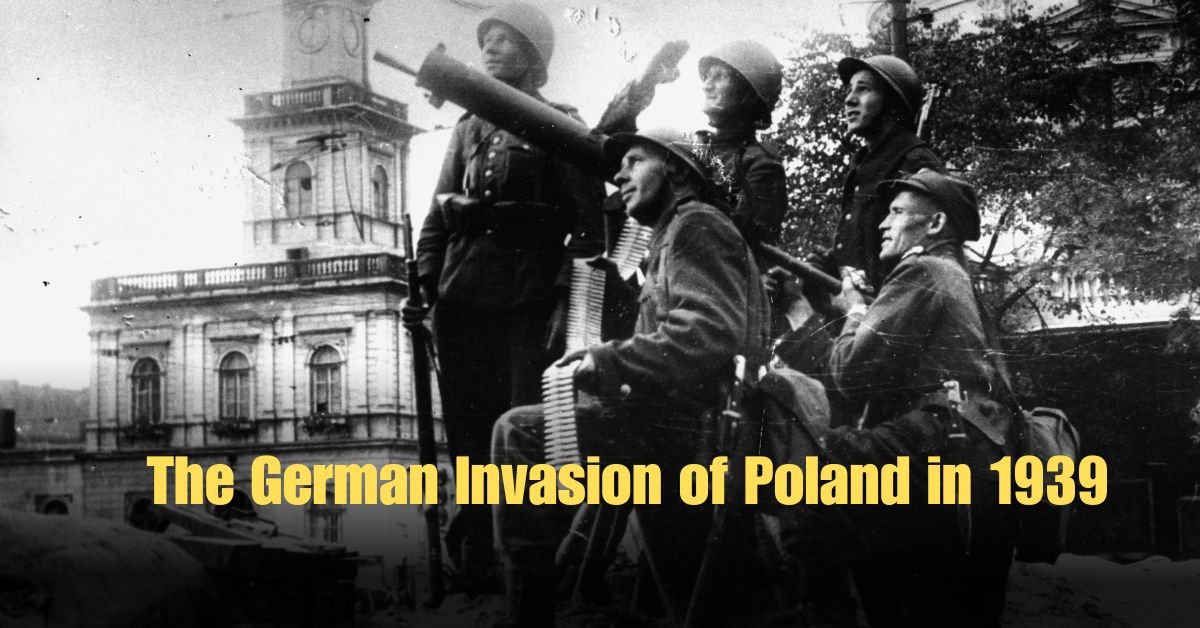
The Map of the German Invasion of Poland in 1939 is more than just a historical artifact it’s the blue print of the beginning of the Second World War and a sharp visual representation of a petrified new military doctrine Blitzkrieg. On 1 September 1939 without a formal declaration of war Nazi Germany launched an attack that suddenly reshaped the geopolitical landscape and shocked the world.
This effort code-named is Operation Fall Weiss to reclose the devastating imbalance between the modern mechanized conflict and out dated defensive strategies of time.
Are you ready to explore deep into the tactics and the long-term geopolitical results of this central moment?
Unpacking Blitzkrieg:The Strategy that Defined in 1939
The single lesson from the German Invasion of Poland was the devastating effectiveness of Blitzkrieg German for the “lightning war.” This was not only a rapid assault but it was carefully orchestrated strategy of coordination that combined three key elements:
- Armor (Panzers): Fast tanks used to punch through enemy lines and keep the pace of the advance high.
- Infantry: Highly motorized forces following the tanks to secure territory and mop up resistance.
- Air Power (Luftwaffe): Crucial air superiority used for Luftwaffe’s bombardments crippling Polish infrastructure (bridges, communication centers) and providing close air support.
This strategy focused on creating deep breakthroughs and achieving rapid mechanized advances to often resulting in the quick encirclement of key defensive positions. The Polish forces, reliant on traditional and slower-moving infantry and cavalry units to simply could not cope with this superior firepower and mobility.
The Multi-Front Assault: Where German Forces Struck
To ensure the rapid collapse of the Polish state the Nazi Germany military struck from multiple directions simultaneously to creating massive pincer movements.
- North: Forces poured in from East Prussia and Pomerania.
- South: Attacks launched from Silesia and German-occupied Slovakia.
- West: Main thrusts came from Brandenburg and the rest of Germany.
This maneuverability evident on the Map of the German Invasion of Poland in 1939 completely outmaneuvered the Polish military’s attempt to establish cohesive continuous front lines.
Courageous Resistance and Tragic Turning Point
Despite being instantly outnumbered, outmaneuvered and overwhelmed the Polish military showed courageous resistance. One of the most significant efforts was the Battle of the Bzura River (9–11 September). This massive Polish counterattack temporarily stalled the German advance to proving that traditional military planning could still pose a threat though ultimately it was not enough.
The Double Blow: The Soviet Invasion
The true turning point that ensured the swift conclusion of the campaign came on 17 September. This day saw the Soviet Union invaded from the east to delivering a fatal double blow to the beleaguered Polish forces.
This was not a surprise attack but the calculated implementation of the secret protocols of the Nazi-Soviet Pact (August 1939). Faced with two massive invasion of forces the defense became unarguable. This cynical act exposed to geopolitical cynicism of the Europe’s totalitarian powers and guaranteed the Partition of Poland.
Ominous Prelude. The Long Term Consequences
The German Invasion of Poland was the ominous start to the global conflict that would follow. It was the first time the world truly saw the destructive potential of modern mechanized warfare versus outdated defensive strategies.
Also Read:Federal cuts upended clinical trials. A new study reveals the toll.
The Partition of Poland effectively served to erase independence once again for the nation of setting the stage for years of brutal occupation by both Nazi Germany and the Soviet Union. This rapid, decisive victory convinced Hitler that his Blitzkrieg strategy was infallible and fueling his hostility toward Western Europe.
FAQs
What was the real goal of Operation Fall Weiss?
Operation Fall Weiss level for complete and rapid military defeat of Poland (known as ‘extermination thinking’) the following Partition of Poland between Germany and the Soviet Union as secretly agreed upon in the Nazi-Soviet Pact.
What was geographical areas were key targets?
German forces targeted the major industrial regions like Silesia and used surrounding territories like East Prussia, Pomerania and Slovakia and Brandenburg as launching points to maximize encirclement.
Conclusion:
The Map of the German Invasion of Poland in 1939 permanently change the course of human history. It is not only marked the definitive Beginning of the Second World War but also arrange the military strategy Blitzkrieg that would dominate warfare for the next two years. The campaign was the tragic demonstration of how technology is combined with ruthless geopolitical cynicism that could swiftly erase independence and devastate nation.
What do you find most shocking about speed of Blitzkrieg campaign?
Share your opinion in the comments below!
Disclaimer
This article provides the analysis of German Invasion of Poland in 1939 based on historical accounts of the Blitzkrieg strategy to Operation Fall Weiss and the following Partition of Poland under the Nazi Soviet Pact. The content is focuses on the military tactics and geopolitical consequences and is presented for educational and historical analysis purposes only.