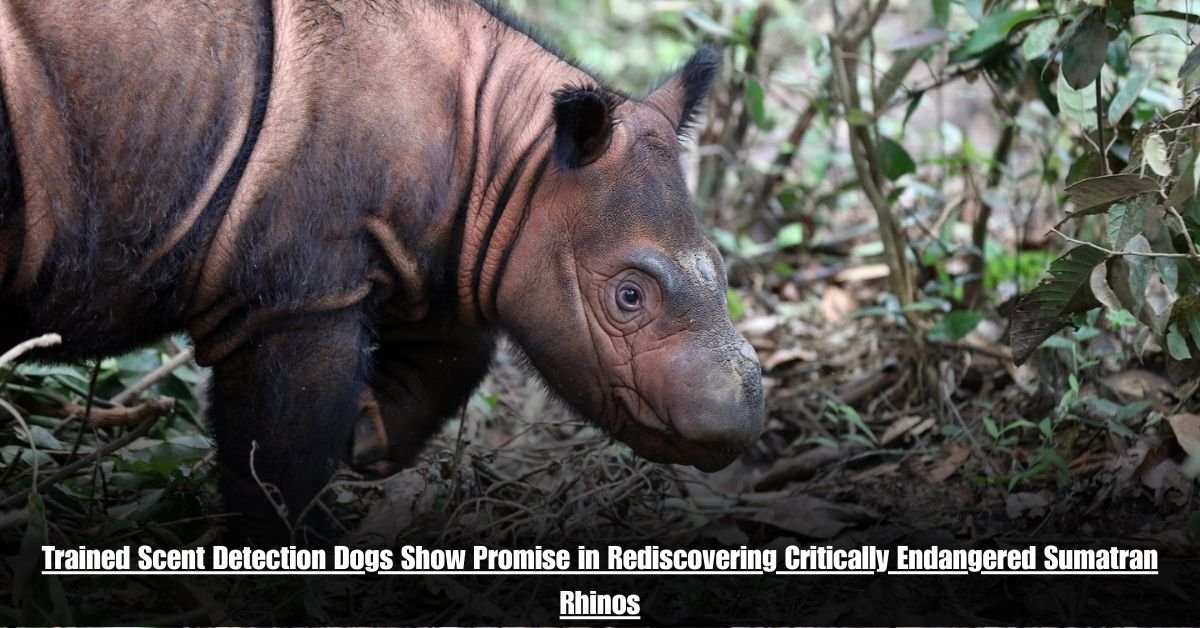
Trained Scent Detection Dogs May Have Found a Lost and Critically Endangered Rhino Population
Specially trained scent detection dogs may have uncovered a lost population of critically endangered Sumatran rhinos in Indonesia’s Way Kambas National Park offering new hope for conservation efforts .
Conservationists may have taken a landmark step toward saving the elusive Sumatran rhino thanks to two highly trained scent detection dogs . In early August 2025 the International Rhino Foundation IRF in partnership with Working Dogs for Conservation Yayasan Badak Indonesia YABI and the Indonesian Ministry of Forestry deployed the canine duo to search for signs of the species in the dense forests of Way Kambas National Park in Sumatra .
The Mission and the Dogs
The goal of the mission was straightforward yet challenging detect rhino presence through scat dung often the most reliable evidence in rainforest habitats where visibility is poor . The two dogs Yagi and Quinn were specially trained using dung from ten captive rhinos at the Way Kambas Rhino Sanctuary . With their powerful olfactory abilities they can detect even faint traces of scent far beyond human capacity .
Also Read : Fishing Captains Lost $25K Gold Chain Recovered by Local Divers
Discovery in Just Two Days
In a remarkable outcome Yagi and Quinn located multiple heaps of suspected Sumatran rhino scat within only two days of searching . Preliminary testing confirmed that at least one sample belongs to a Sumatran rhino with two additional confirmatory tests underway. Only after these tests are completed will the Indonesian government officially declare the rediscovery .
Why It Matters
The implications of this discovery are monumental . Fewer than 50 Sumatran rhinos are believed to survive worldwide with the most recent population estimates ranging between 34 and 47 individuals . For years conservationists have struggled to find concrete evidence despite deploying rangers drones and camera traps across remote areas. The fact that these dogs succeeded so quickly underscores the potential for new methods in conservation .
If confirmed this rediscovery may point to the existence of a hidden previously unrecorded group of rhinos a vital boost for a species teetering on the edge of extinction .
Expert Reactions and Hope Ahead
Nina Fascione executive director of the IRF shared her optimism .
Quite honestly in my opinion I trust the dogs… They found what everybody believes is rhino’s scat … it’s really good news .
Pete Coppolillo executive director of Working Dogs for Conservation emphasized the stakes .
With fewer than 50 Sumatran rhinos in the entire global population even a single individual is a big deal .
Conservationists hope that the discovery involves not just a lone survivor but potentially a breeding population which would be a game changer for the survival of the species .
What Comes Next
- Confirmatory Testing : Two further lab tests must confirm the scats origins before an official declaration can be made .
- Conservation Action : If confirmed the rhinos could become part of captive breeding programs to enhance genetic diversity especially if males are found .
- Extended Searches : Plans are in motion to deploy scent detection dogs in other protected areas such as Bukit Barisan Selatan National Park where undiscovered rhinos may also persist .

Significance of Scent Detection Canines in Conservation
This breakthrough highlights the extraordinary value of scent detection dogs in wildlife conservation . Where traditional tools like drones and camera traps failed the dogs succeeded swiftly . Their role not only demonstrates innovation in conservation science but also offers a renewed sense of hope for the survival of one of Earth’s rarest mammals .
In combining human expertise with canine capabilities conservationists are proving that creative interdisciplinary approaches may be the key to protecting species once thought beyond saving .